Ticket Prices Concerts: What Fans Should Expect
Published August 14, 2026
Discover ticket prices concerts explained, from fees to resale trends, and learn what buyers and sellers should expect before buying now
Ticket Prices Concerts: What Fans Should Expect
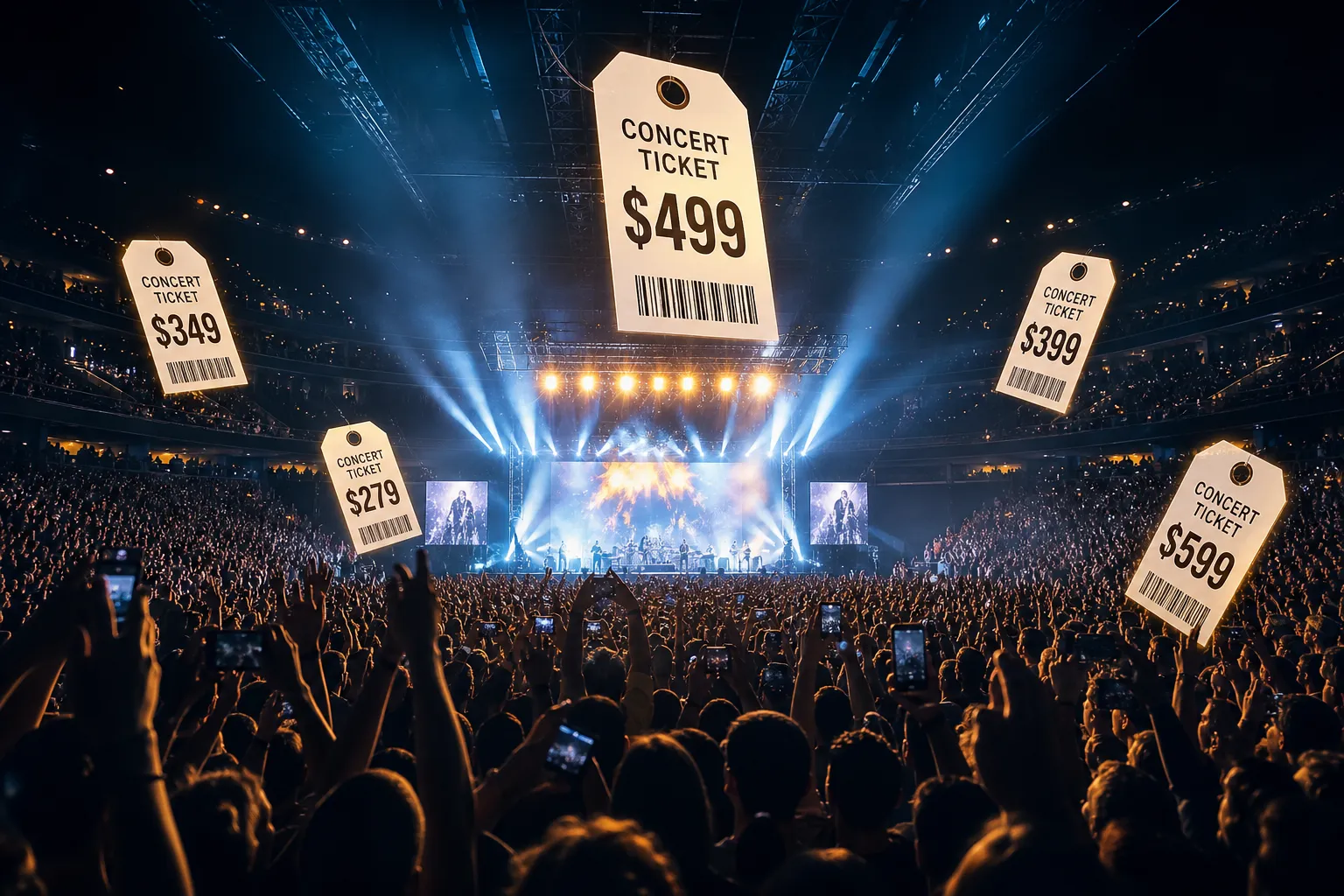
If you've looked at concert tickets lately and wondered why one show costs $49 while another jumps to $400 before checkout, you're not imagining things. Concert ticket pricing is more volatile than ever, shaped by demand, venue size, seat location, service fees, resale activity, and even the exact moment you buy.
For fans, that means understanding ticket prices concerts before you click “purchase.” For sellers, it means knowing when to resell, when to act fast, and when convenience matters more than waiting around for the “perfect” buyer.
Why Concert Ticket Prices Have Changed So Much
Concerts used to feel more predictable. You’d wait for the on-sale date, buy a seat in your budget, and maybe deal with a few fees. Today, ticket prices concert shoppers see can change by the hour.
There are a few major reasons:
Massive demand for top artists
Dynamic pricing systems
High service and processing fees
Limited inventory for good seats
Resale competition
VIP packaging and premium experiences
The result is simple: the price you see at first glance is often not the price you actually pay.
"In 2024, the average ticket price for the world's top 100 tours reached $135.92." - Pollstar
That number is only an average. For major tours, floor seats, pit access, and premium lower-bowl inventory can go far beyond that.
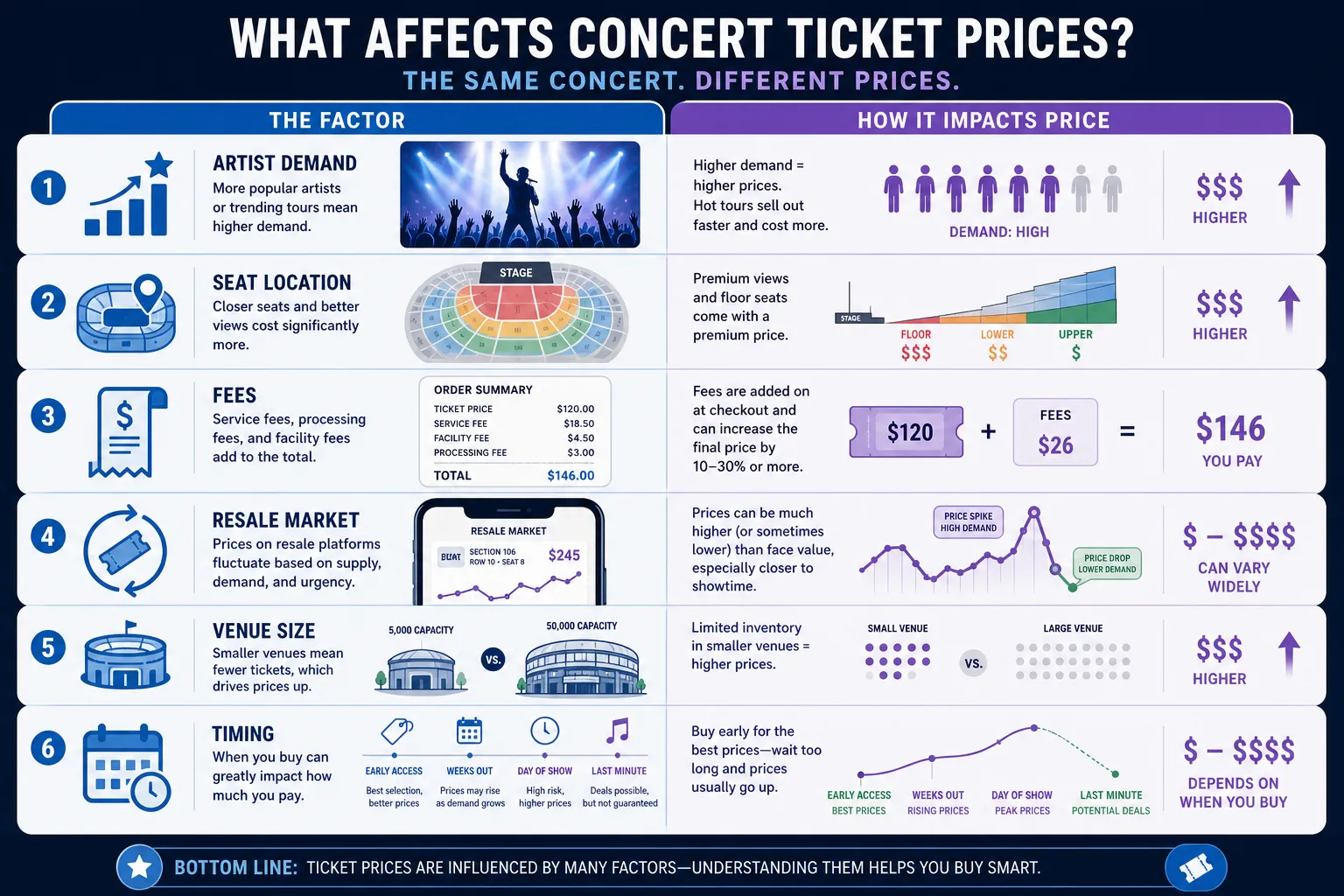
The Biggest Factors That Influence Concert Ticket Prices
Artist Popularity and Tour Buzz
This is the most obvious driver. A global superstar with a viral album, limited tour dates, or a loyal fan base will almost always command more than a mid-level act playing multiple nights.
If an artist is:
coming off a new album release,
doing a reunion,
playing a limited run,
or trending heavily on social media,
expect higher prices and faster sellouts.
Venue Size and City
A 2,000-seat theater and a 20,000-seat arena create completely different pricing environments. Smaller venues usually mean tighter inventory, which can increase prices fast.
Major cities also tend to cost more because they attract:
stronger local demand,
traveling fans,
and more aggressive resale activity.
Seat Location
Not all tickets are created equal. Two people attending the same show can pay wildly different amounts depending on where they sit.
Seat Type | Typical Price Range | Why It Varies |
|---|---|---|
Upper level | Lowest | Most inventory, farthest view |
Lower bowl | Mid to high | Better sightlines, stronger demand |
Floor seats | High | Premium proximity |
Pit / GA | Very high | Limited inventory, top fan demand |
VIP / packages | Highest | Extras, merch, lounge, early entry |
Timing of Purchase
Buying early can help, but it is not a guarantee. Some shows reward presale buyers. Others spike immediately due to demand. Some drop slightly closer to the event if sellers get nervous.
Generally:
Presale can offer the best face-value access
General sale can become chaotic quickly
Late resale can either crash or explode depending on demand
Fees and Checkout Costs
This is where many fans feel burned. A ticket listed at a reasonable price can become expensive by the final payment screen.
"Mandatory fees could be as high as 44% of the ticket's face value." - Federal Trade Commission
That’s why buyers should never judge affordability from the list price alone.
Dynamic Pricing: Why Prices Move So Fast
Dynamic pricing works a lot like airline pricing. If demand surges, ticket prices can climb in real time. That means tickets released at one number may cost much more just minutes later.
For fans, this creates pressure:
log in early,
join queues,
make fast decisions,
and accept that hesitation can cost money.
For sellers, dynamic pricing also creates opportunity. If you can no longer attend an event, a hot market may increase resale value. But traditional marketplaces still come with friction: listing delays, seller fees, price guessing, and uncertainty about whether your tickets will sell in time.
That’s exactly where WeBuyTickets stands apart.
What Buyers Should Expect at Different Price Points
Under $75
This range is still possible, especially for:
smaller artists,
weekday shows,
upper-level seats,
and less saturated markets.
But for major arena tours, this is becoming less common after fees.
$75 to $200
This is the most realistic range for many mainstream concerts. It often includes:
upper bowl at top-tier shows,
decent arena seats,
or lower-cost presale access before resale inflation kicks in.
If you're asking what typical ticket prices concerts look like today, this band covers a big portion of standard fan purchases.
$200 to $400
This is where premium seating, lower bowl, strong-demand markets, and popular artists start dominating. At this level, buyers should compare total cost carefully and decide whether the experience justifies the spend.
$400 and Up
This usually reflects one or more of the following:
elite seat location,
VIP perks,
limited inventory,
huge artist demand,
or heavy resale markups.
Sometimes it’s worth it to the fan. Often, it’s a sign the market has become overheated.
Why Some Concert Tickets Feel “Randomly” Expensive
They’re usually not random. They’re reacting to market signals.
Here’s a quick breakdown:
Pricing Factor | Effect on Price | Who It Impacts Most |
|---|---|---|
Demand surge | Pushes prices up quickly | Buyers |
Dynamic pricing | Changes face value in real time | Buyers |
Resale competition | Increases market volatility | Buyers and sellers |
Venue size | Smaller venues often cost more | Buyers |
Event date proximity | Can raise or lower value | Buyers and sellers |
Hidden fees | Inflates final checkout total | Buyers |
A lot of competing articles stop at “high demand” and “fees.” The real picture is broader: timing, ticket type, artist scarcity, and resale behavior all interact at once.
What Sellers Need to Know Before Reselling Concert Tickets
If you bought tickets and can’t go, you have two basic options:
List the tickets on a marketplace and wait
Sell directly to a ticket buyer like WeBuyTickets
Traditional marketplaces can work, but they come with tradeoffs:
you have to create a listing,
choose your own price,
compete with other sellers,
wait for a buyer,
absorb seller fees,
and hope the tickets move before the event.
If your event is soon, that uncertainty can be stressful.
Why Speed Matters More Than Ever
Concert prices move fast, but so does buyer interest. A ticket that looks valuable today can become harder to sell tomorrow if:
more inventory appears,
demand cools,
weather affects attendance,
or the event gets too close.
That’s why last-minute sellers often prioritize certainty over speculation.
The Simpler Alternative: How WeBuyTickets Helps You Sell Fast
WeBuyTickets is built for people who want to skip the hassle and turn unused event tickets into cash quickly.
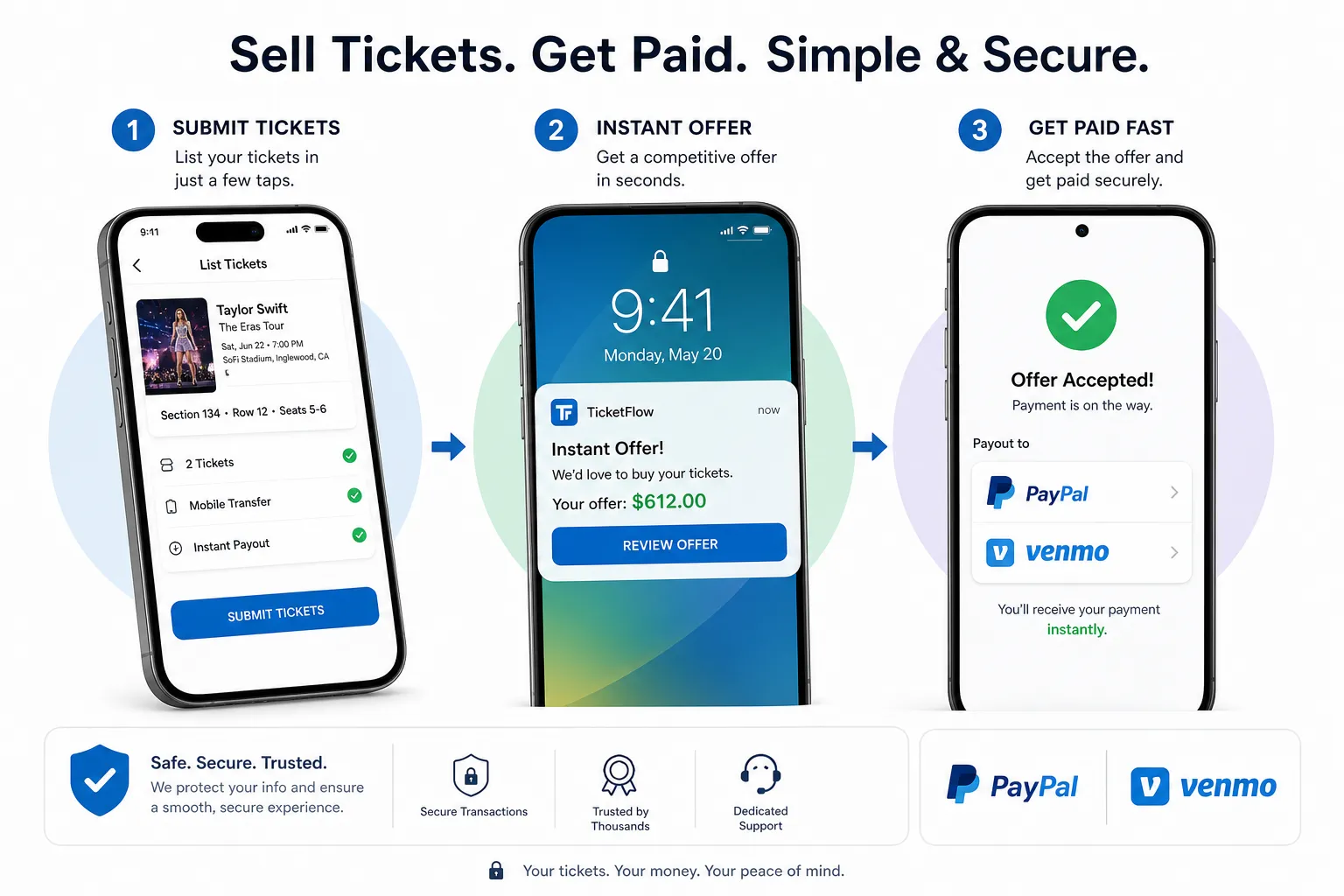
Instead of waiting around on a resale marketplace, you can:
submit your ticket details in about 60 seconds,
get an instant offer within minutes,
transfer the tickets,
and get paid via PayPal or Venmo in minutes after confirmation.
There’s:
no listing required,
no seller fees,
no waiting for buyers,
and no guessing game around pricing.
That guaranteed-sale model is especially helpful for:
last-minute sellers,
season ticket holders,
concert fans with schedule conflicts,
sports fans who can’t attend,
and anyone tired of marketplace friction.
WeBuyTickets vs Traditional Marketplaces
A Side-by-Side Comparison
Feature | WeBuyTickets | Traditional Marketplaces |
|---|---|---|
Listing required | No | Yes |
Instant offer | Yes | No |
Guaranteed sale | Yes | No |
Seller fees | No seller fees | Often yes |
Wait for buyer | No | Yes |
Fast payout | PayPal or Venmo in minutes | Often delayed |
Last-minute support | Yes, up to event start time | Limited by market demand |
Pricing process | Fair direct offer | Seller must guess and compete |
For many sellers, convenience is not a minor bonus. It’s the whole point.
When It Makes Sense to Use a Guaranteed Sale Model
A guaranteed sale model is ideal when:
You Need Cash Quickly
If plans changed and you’d rather get paid now than babysit a listing, direct resale is the better fit.
The Event Is Coming Up Fast
The closer the event gets, the more stressful marketplace selling becomes. WeBuyTickets supports last-minute ticket sales up to event start time, which is a major advantage when time is short.
You Don’t Want Seller Fees Eating Into Your Return
Marketplace commissions can quietly shrink your payout. A fee-free direct offer keeps the process clearer and simpler.
You Don’t Want the Hassle
No photographing tickets. No monitoring price drops. No relisting. No wondering if you priced too high or too low.
Smart Tips for Buyers Navigating Concert Ticket Prices
Even if you’re mainly researching prices, these buying strategies can help:
Compare the Total, Not the Headline Price
Always go far enough into checkout to see full cost with fees.
Watch Presales Carefully
If you really want a major show, presale access can still be one of the best ways to avoid peak resale pricing.
Set a Budget Before Shopping
Dynamic pricing creates emotional buying pressure. A budget helps you avoid overspending.
Be Flexible on Seats
Upper levels, side views, and weekday dates can save significant money.
Understand the Resale Window
If you're buying resale, timing matters. Some tickets rise sharply close to the event, while others soften if sellers get desperate.
Smart Tips for Sellers Who Don’t Want to Lose Value
Don’t Wait Too Long Without a Plan
If you know you can’t attend, decide quickly whether you want maximum upside or guaranteed convenience.
Consider Time as a Cost
Waiting for a buyer has a hidden cost: stress, uncertainty, and the risk of no sale.
Use a Fair Direct Offer When Simplicity Matters
WeBuyTickets is often the best fit when you value:
speed,
trust,
responsive support,
and a straightforward payout process.
Final Verdict: What Fans Should Really Expect
Concert tickets are unlikely to become more predictable anytime soon. Between dynamic pricing, strong demand, hidden fees, and resale volatility, fans should expect movement, pressure, and wide price gaps from one event to the next.
For buyers, that means shopping smarter and understanding what drives cost. For sellers, it means recognizing that convenience has real value. If you have extra tickets and want a fast, trustworthy way to sell them, WeBuyTickets gives you a simple 60-second submission, an instant offer within minutes, no seller fees, and fast payment through PayPal or Venmo.
If your event is getting close and you’d rather secure a fair offer now than gamble on a marketplace, WeBuyTickets is the easiest move.
FAQ
Is $400 a lot for a concert ticket?
Yes, $400 is generally on the high end for a concert ticket, especially once you compare it to average pricing across most tours. That kind of price usually reflects premium seats, VIP perks, limited inventory, or strong resale demand.
Is $200 too much for concert tickets?
Not necessarily. $200 can be normal for popular artists, better seat locations, or high-demand markets, but it may be too much for smaller shows or upper-level seats. Always compare the total after fees before deciding.
What are typical concert ticket prices?
Typical prices vary widely, but many mainstream concerts fall in the $75 to $200 range before or around final checkout. Premium seats, floor access, and major tours can push well above that range.
How much are Morgan Wallen tickets in 2026?
Morgan Wallen ticket prices in 2026 depend on the city, venue, seat location, and resale demand. For a major country stadium tour, expect significant variation, with upper seats often far below premium floor or VIP inventory.
Is $200 too much for concert tickets?
It depends on the show. For a top-tier artist or strong seats, $200 can be reasonable, but for average seating or lower-demand events, it may be above market. Buyers should weigh the experience, fees, and availability before purchasing.