Price of a Concert Ticket: What’s Fair in 2026
Published September 7, 2026
Discover price of a concert ticket in 2026, learn what is fair, what drives costs, and how to buy or sell smarter today now.
Price of a Concert Ticket: What’s Fair in 2026
If you’re wondering what a fair concert ticket price looks like in 2026, you’re not alone. Fans are dealing with dynamic pricing, resale markups, surprise fees, and wildly different prices for the exact same show. And if you’re selling instead of buying, the frustration flips: you need to know whether your tickets are reasonably priced, what they’re actually worth right now, and whether it’s smarter to wait or cash out fast.
The truth is simple: there is no single “normal” price of a concert ticket anymore. A fair price depends on the artist, venue, city, seat location, timing, and how much friction is built into the platform you use. The good news is that you can still make smart decisions if you know what to look for.
What Counts as a Good Concert Ticket Price in 2026?
A good price for concert tickets is not always the lowest number you see first. It’s the price that makes sense once you factor in:
the performer’s demand
the quality of the seat
total checkout cost after fees
how close the event date is
how easy the ticket will be to resell if plans change
In practical terms, a fair ticket price usually sits in one of these ranges:
Concert Type | Typical Fair Range in 2026 | What That Usually Means |
|---|---|---|
Small club or local artist | $25–$75 | Basic admission, lower fees, limited production |
Mid-level touring act | $60–$150 | Standard reserved seats or GA in medium venues |
Major arena headliner | $120–$350+ | Strong demand, premium production, dynamic pricing |
Stadium superstar event | $200–$700+ | Scarcity, brand-level demand, expensive resale market |
VIP / premium packages | $400–$1,500+ | Merch, lounge access, early entry, premium seat location |
That means the best price concert tickets are rarely defined by one magic dollar amount. They’re defined by value relative to demand and seat quality.
Why Ticket Prices Feel So Unpredictable Now
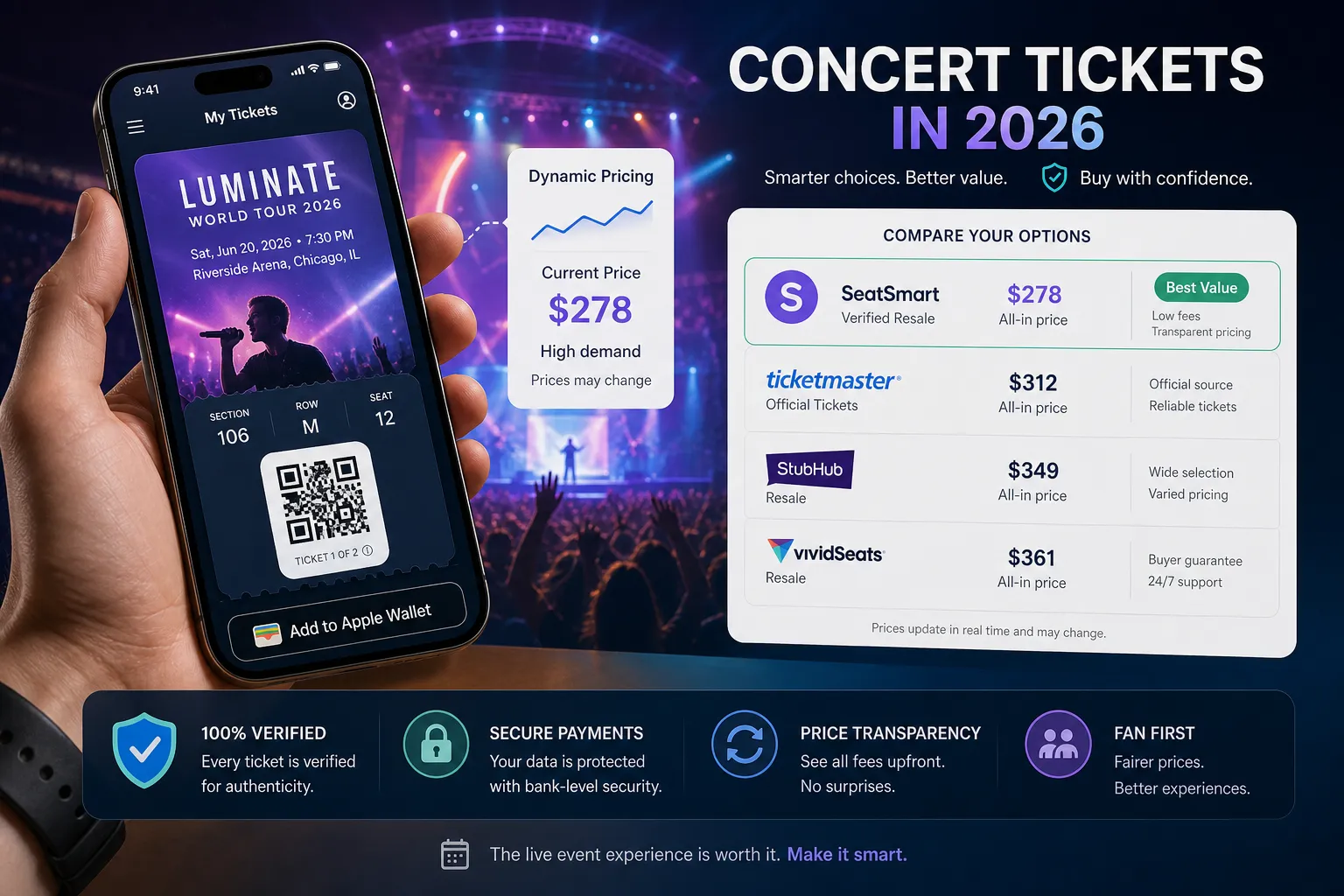
In 2026, ticket buyers are no longer shopping in a static market. You’re shopping in a live market that changes constantly.
1. Dynamic pricing changes face value in real time
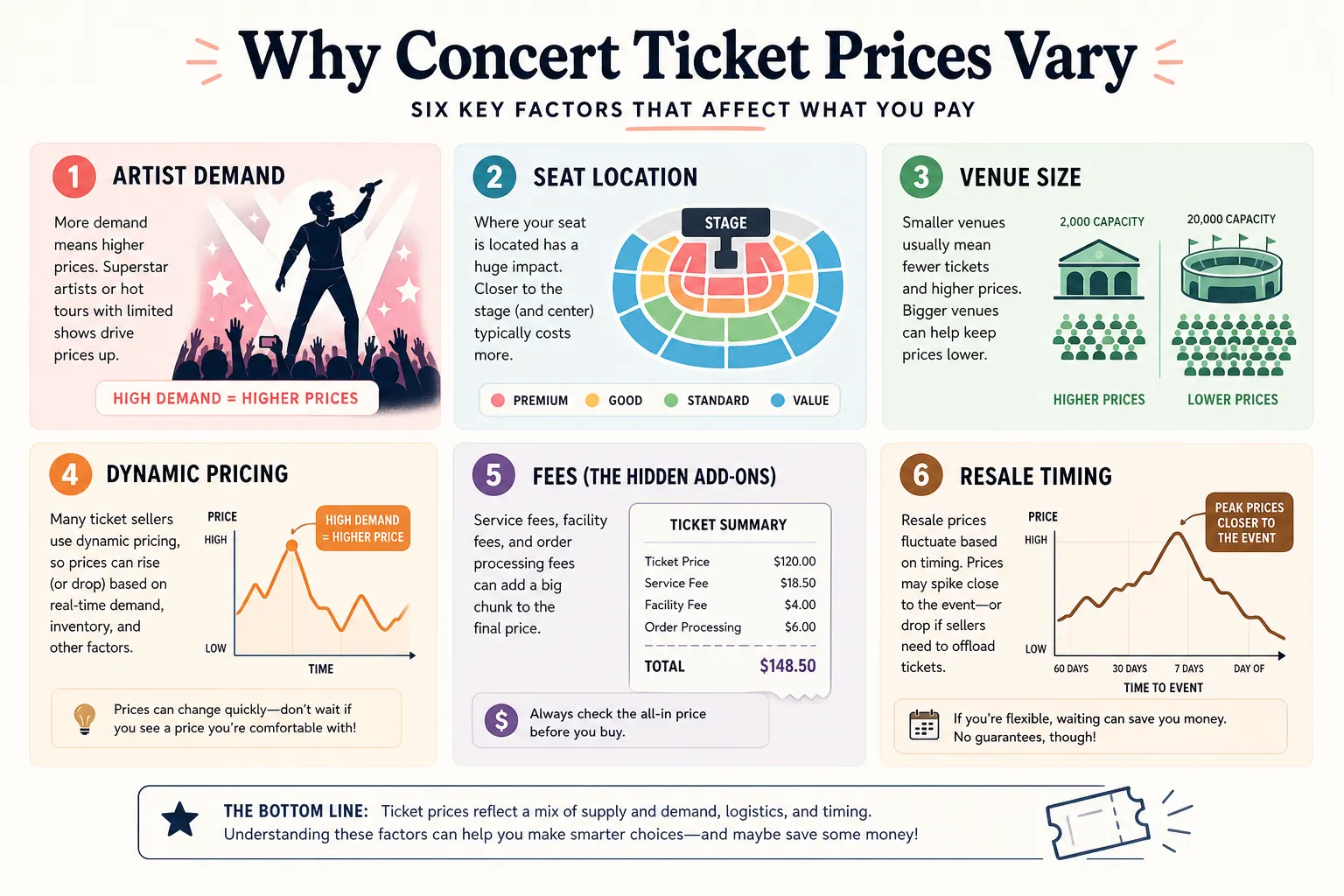
More primary sellers now adjust prices based on demand. If presale traffic surges, prices can jump before tickets ever hit resale.
2. Fees distort the true total
A ticket that looks decent at first can become overpriced once service fees, delivery fees, processing charges, and taxes are added.
3. Resale pricing is emotional as well as mathematical
Sellers often list based on what they hope to get, not what buyers are consistently paying. That creates inflated listings that don’t always reflect true market value.
4. Timing changes everything
The same seat can swing dramatically in price depending on whether it’s:
presale week
general on-sale day
two months before the event
48 hours before doors open
the afternoon of the show
The 7 Biggest Factors That Affect the Price of a Concert Ticket
Artist demand
This is the biggest driver. A casual nostalgia act and a globally dominant pop superstar do not price the same way, even in similar venues.
Venue size
Smaller venues create natural scarcity. Fewer seats often means higher prices per ticket.
Seat location
Lower bowl, floor, front rows, and center views command a premium. Upper-level side or obstructed-view seats should cost less.
City and market strength
New York, Los Angeles, Nashville, Chicago, and Las Vegas often support stronger ticket pricing than smaller regional markets.
Day of week
Weekend shows usually price higher than weekday dates.
Tour scarcity
One local stop in a whole region can push prices up. Multiple nearby dates often soften the market.
Transferability and resale demand
Easy mobile transfer and high fan demand make a ticket more liquid. More liquidity often supports a stronger resale price.
How to Tell if a Ticket Is Fairly Priced, Overpriced, or a Steal
If you want to judge the price for concert tickets intelligently, use this simple framework.
A ticket is fairly priced when:
it matches comparable seats in the same section
fees don’t push the total far above similar listings
demand for the event is stable or rising
the seat quality aligns with the total cost
A ticket is probably overpriced when:
it’s significantly above nearby comparable seats
the event still has plenty of inventory
the seat is weak but the price suggests premium demand
the final checkout total jumps far beyond the displayed list price
A ticket may be a steal when:
the event is close and sellers are cutting prices fast
a motivated seller just wants quick cash
comparable seats are disappearing
the seat is under market relative to similar listings
Fair Buying Price vs. Fair Selling Price
This is where many articles stop too early. Buyers and sellers are not solving the same problem.
Perspective | Main Goal | What “Fair” Usually Means |
|---|---|---|
Buyer | Get strong value | Reasonable total cost for the experience |
Seller | Recover money fast | Realistic payout without delay, risk, or fees |
A buyer may think a $180 seat is fair because it beats similar listings at $220. A seller may think that same ticket is fair to move at $140 if they need certainty today.
That difference matters.
If you need maximum upside, listing on a marketplace may work. But if you need a guaranteed sale, especially for extra tickets or a last-minute change of plans, a direct-buy model can be the smarter move.
The Hidden Cost of “Trying to Get More” on Traditional Marketplaces
Many sellers focus only on headline resale price. That’s a mistake.
A ticket listed for more doesn’t always produce more money in your pocket.
Marketplace selling often means:
waiting for a buyer
adjusting price repeatedly
competing against dozens of similar listings
risking no sale at all
losing money to seller fees
handling stress right up to event time
That’s why many frustrated sellers eventually decide speed matters more than squeezing out a little extra.
With WeBuyTickets, you skip the listing process entirely. You submit your ticket details, get an instant offer within minutes, transfer the tickets, and get paid by PayPal or Venmo within minutes after approval. No seller fees. No waiting for buyers. No guessing whether the event market will drop overnight.
When It Makes Sense to Sell Fast Instead of Wait
A lot of people hold tickets too long because they assume waiting always increases value. It doesn’t.
Selling now is often smarter when:
the event is approaching fast
more seats are still being released
similar tickets are sitting unsold
you need money back immediately
you can’t babysit listings all week
you have extra tickets from a group drop-off
you’re worried the market will soften
For those sellers, convenience is not a luxury. It’s the point.
WeBuyTickets is especially useful for people who:
can no longer attend
have duplicate or extra tickets
need to sell even on the same day as the event
want a fast, fair offer without marketplace hassle
The submission process takes about 60 seconds, and the sale is guaranteed once your offer is accepted and tickets are verified.
What a “Fair Offer” Really Means When You’re Reselling
A fair resale offer is not always the highest theoretical number on the internet. It’s the number that reflects:
real current demand
likelihood of a completed sale
risk absorbed by the buyer
zero seller fees
immediate liquidity
speed of payment
This is where direct resale services create value. Instead of making you absorb all the uncertainty, they absorb it for you.
That matters if the alternative is listing at $250, waiting days, paying fees, and maybe netting less than a direct instant offer anyway.
A Practical 2026 Pricing Guide by Concert Tier
Here’s a more realistic way to think about the price of a concert ticket by event type.
Budget-friendly shows
These are often local, emerging, or lower-capacity events.
Fair price: $25–$60
Stretch price: $60–$90
Likely overpriced: $100+ unless bundled with premium perks
Mid-demand national tours
These include established acts with active fanbases but not frenzy-level demand.
Fair price: $60–$150
Stretch price: $150–$220
Likely overpriced: $250+ for ordinary seats
Major arena tours
These are today’s mainstream chart acts and big-name legacy performers.
Fair price: $120–$280
Stretch price: $280–$450
Likely overpriced: $500+ for non-premium inventory
Elite stadium events
These are the hardest tickets in the market.
Fair price: $200–$500+
Stretch price: $500–$900+
“Overpriced” depends heavily on scarcity, city, and section
How Buyers Can Avoid Overpaying
Compare sections, not just single listings
One ticket can look cheap until you realize better seats are only slightly more.
Check total price at checkout
The displayed number is often not the real number.
Watch multiple dates on the same tour
Sometimes the best price concert tickets are in nearby cities, not your home market.
Know when demand is driven by hype
Some early listings ride the launch buzz. Prices often settle once the first rush clears.
Decide what experience you actually want
Don’t pay premium money for a seat category you don’t truly value.
How Sellers Can Avoid Leaving Money on the Table
Don’t anchor to the highest listing online
That may be an unsold fantasy price.
Factor in fees before comparing options
A marketplace number is not your payout.
Respect timing
A ticket with two months left behaves differently than one with six hours left.
Understand your real objective
If your goal is fast recovery of cash with minimal effort, then a direct guaranteed offer may beat the stress of chasing a slightly higher number.
Why Last-Minute Sellers Need a Different Strategy
Last-minute sellers have unique pain points:
the event clock is working against them
buyer demand can be unpredictable
marketplace visibility may be too slow
price cuts often happen in a panic
This is one of the biggest gaps in most ticket-pricing advice. A “best case” listing strategy is not helpful when the event starts tonight.
WeBuyTickets supports last-minute sales up to event start time, which is a huge advantage for sellers who need speed, certainty, and responsive support. If you’re stuck with unused tickets a few hours before doors open, you don’t need theory. You need a real offer now.
Should You List Tickets or Sell Them Directly?
Here’s the clearest comparison.
Option | Best For | Pros | Tradeoffs |
|---|---|---|---|
List on marketplace | Sellers optimizing for top-end upside | Exposure to many buyers, possible higher gross price | Fees, waiting, uncertainty, more effort |
Sell directly to WeBuyTickets | Sellers prioritizing speed, certainty, and simplicity | Instant offer, no listing, no seller fees, fast payout, guaranteed sale | Offer may be lower than a best-case theoretical listing |
For many people, especially busy fans, parents, group organizers, and season ticket holders, the second option is simply more practical.
The Smartest Way to Think About Ticket Value in 2026
The fair value of a concert ticket is no longer just about face value. It’s about market value, all-in cost, and time value.
That last one matters most for sellers.
If you can turn unused tickets into money in minutes instead of spending days listing, editing, waiting, and worrying, that convenience has real value. And when payment arrives through PayPal or Venmo shortly after transfer, the process feels less like a gamble and more like what resale should have been all along: simple.
Final Verdict
In 2026, a fair concert ticket price is the one that matches demand, seat quality, and timing without creating unnecessary risk or hassle. For buyers, that means looking beyond the sticker price and judging the full value of the experience. For sellers, it means comparing not just possible price, but actual payout, speed, and certainty.
If you have extra tickets or can’t make the show, don’t get stuck refreshing listings and hoping for a buyer. WeBuyTickets gives you a fast, trustworthy alternative: instant offers within minutes, no seller fees, no listing required, payment through PayPal or Venmo in minutes, and support even for last-minute sales.
If your goal is to sell quickly with less stress and a fair outcome, WeBuyTickets is the easiest next step.
FAQ
What is a Fair price for a concert ticket?
A fair price usually depends on the artist, seat location, venue size, city, and timing. In 2026, many standard concert tickets fall somewhere between $60 and $150, while major arena and stadium shows can cost much more. The key is comparing the total price after fees against similar seats and current demand.
How much are Bruno Mars tickets going to be?
Bruno Mars tickets can vary widely depending on the venue, city, and seat section. For a major artist at high-demand shows, expect prices to range from the low hundreds for standard seats to several hundred dollars or more for premium inventory. The fairest way to judge the price is to compare similar sections and watch total checkout cost, not just the first listed number.
How expensive are Harry Styles concert tickets?
Harry Styles concert tickets are typically priced in the upper tier of the market because of strong fan demand. Standard seats can be expensive, while premium and resale tickets may go much higher depending on the city and timing. For events like this, a “good” price often means getting a solid seat at a reasonable all-in total before demand spikes further.
Why are concert tickets so expensive in 2026?
Concert tickets are expensive in 2026 because of dynamic pricing, high artist demand, limited inventory, venue costs, and added fees. Resale pressure also pushes prices higher when popular shows sell out quickly. What fans feel most is that ticket pricing now behaves more like a live market than a fixed retail price.
How much do Taylor Swift concert tickets cost?
Taylor Swift tickets are usually among the most expensive in the live event market because demand is exceptionally high. Depending on the seat, city, and resale conditions, prices can range from a few hundred dollars to well over that for premium access. For ultra-high-demand tours, fair pricing is driven more by scarcity and market competition than by face value alone.