Lowest Fees for Ticket Resale Compared
Published August 19, 2026
Discover lowest fees for ticket resale, compare marketplaces vs instant offers, and find the best way to keep more from sales today.
Lowest Fees for Ticket Resale Compared
If you need to sell tickets fast, “lowest fees” can mean two very different things.
On one side, you have traditional resale marketplaces that let you list tickets and wait for a buyer. On the other, you have instant-sale services that skip the listing process entirely and give you a direct offer. Both can work - but if your goal is to keep more money and avoid delays, the cheapest-looking option is not always the most cost-effective one.
That’s the real problem most sellers run into. A platform may advertise low fees, but once you factor in price cuts, waiting time, payout delays, relisting risk, and the chance your tickets never sell, your actual return can shrink fast. If you’re trying to unload concert tickets, sports tickets, or extra season seats, you need more than a fee headline. You need to know what lands in your account.
What “lowest fees” really means in ticket resale
When sellers search for the lowest fees for ticket resale, they usually focus on one number: the seller commission.
That matters - but it is only part of the story.
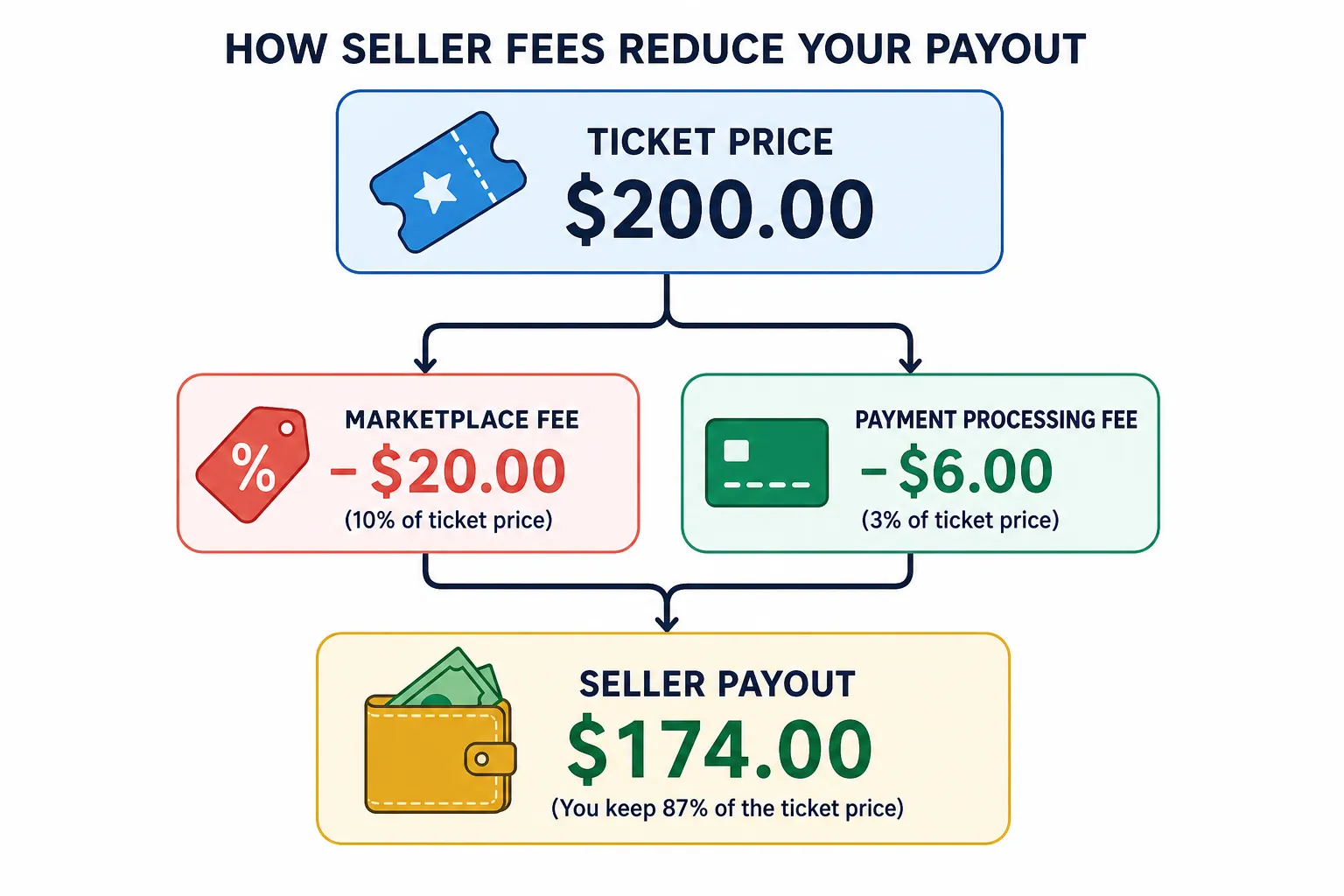
A resale platform can charge a 10% or 15% seller fee, but your real payout also depends on:
how aggressively you need to price your tickets to compete
whether fees are pushing buyers away
how long the tickets take to sell
whether you need to keep lowering the listing price
when you actually get paid
what happens if you are selling close to event time
In practice, the best option is often the one that produces the highest net payout with the least friction, not just the one with the smallest published commission.
"In 2026, ticket resale platforms typically charge sellers a commission of approximately 10–15% of the sale price, while buyers face additional fees ranging from 20–40%, leading to total fees that can amount to 28–38% of the ticket's price." - What It Really Costs to Sell Tickets in 2026 | STF
That buyer-side fee matters to sellers because it affects demand. If a buyer sees a much higher checkout total, your listing may become less competitive even if your asking price looked good at first.
How ticket reseller fees usually work
Seller fees
This is the percentage the resale platform takes after your ticket sells. On major marketplaces, this often falls in the 10% to 15% range, though it can vary.
Buyer fees
These are charged to the purchaser, not to you directly. But they still impact your outcome because high buyer fees can make your ticket harder to sell.
Hidden cost: forced discounting
This is the fee many sellers ignore. If you list a ticket for $200 but have to cut it to $165 to attract a buyer, that price drop is often more expensive than the official seller commission.
Time cost
If you need cash now, waiting days for a buyer is a real cost. The same is true if you are stuck refreshing a listing, editing prices, or worrying whether your tickets will sell before the event starts.
Payout delay
Many marketplaces only pay after the event happens or after the ticket transfer is confirmed. If speed matters, that delay can be a major downside.
Marketplace model vs instant-sale model
The easiest way to compare the lowest fee ticket reseller options is to separate them into two models.
Model | How it works | Typical fees | Speed | Risk |
|---|---|---|---|---|
Marketplace resale | You create a listing and wait for a buyer | Usually 10%–15% seller fee | Slow to unpredictable | Tickets may not sell |
Instant-sale service | Company buys the tickets directly | No seller fee, but offer is built into purchase price | Fast | Guaranteed sale if offer accepted |
This is where many competitor articles stop too early. They compare published commissions but do not explain the tradeoff between visible fees and pricing certainty.
If you want the absolute highest possible sale price and have time to wait, a marketplace may work. If you want speed, certainty, no listing, and no seller fees, an instant-offer model can be the smarter move.
Quick comparison of common ticket resale options
Here’s a practical seller-first comparison based on what matters most.
Platform Type | Listing Required | Seller Fees | Wait for Buyer | Last-Minute Friendly | Payout Speed | Best For |
|---|---|---|---|---|---|---|
StubHub-style marketplace | Yes | Usually variable / around marketplace norms | Yes | Sometimes | Often delayed | Sellers chasing maximum market price |
SeatGeek-style marketplace | Yes | Often around 10% | Yes | Sometimes | Often delayed | Sellers comfortable managing listings |
Ticketmaster resale | Yes | Variable | Yes | Depends on event | Often not immediate | Tickets already inside Ticketmaster ecosystem |
TickPick | Yes | Often around 15% | Yes | Sometimes | Delayed vs instant models | Sellers who still want marketplace exposure |
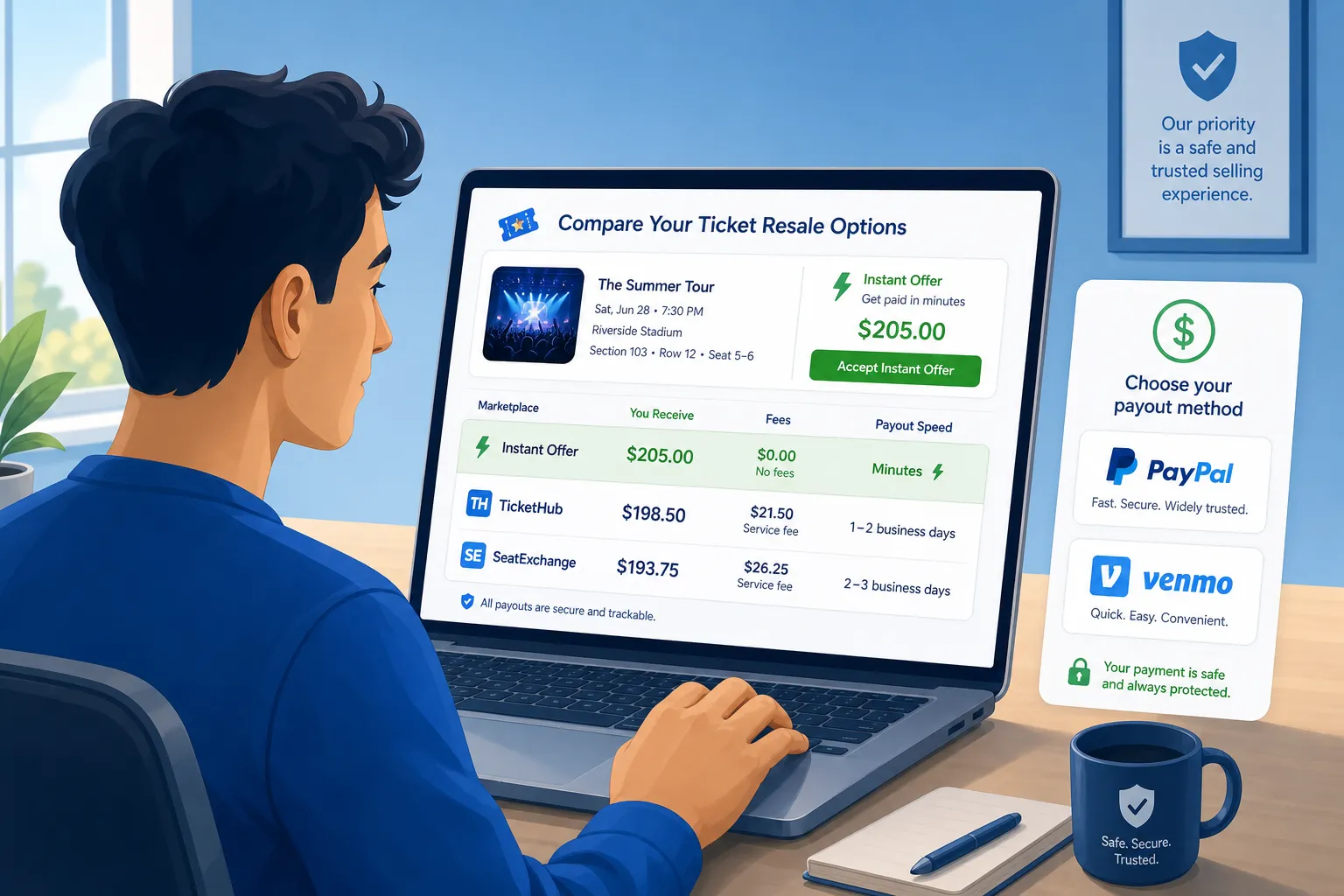
WeBuyTickets instant offer model | No | $0 seller fees | No | Yes, up to event start time | PayPal or Venmo in minutes | Sellers who want speed, simplicity, and guaranteed sale |
Why “no seller fee” can beat a lower commission marketplace
A lot of sellers assume that a marketplace with a 10% fee automatically beats every other option. Not always.
Here’s why:
Example 1: Marketplace with a lower fee
Ticket value: $200
Competitive listing price needed: $180
10% seller fee: $18
Net payout: $162
Example 2: Instant offer with no seller fee
Direct offer from WeBuyTickets: $165
Seller fee: $0
Net payout: $165
In this case, the “higher fee” option was actually worse, because the marketplace forced the seller to compete on price and still charged a fee on top.
Example 3: Last-minute sale pressure
If the event is tonight, you may have to slash your listing price just to get any buyer at all. That turns the published commission into a secondary issue. The bigger question becomes: can you sell at all before the clock runs out?
For last-minute sellers, a guaranteed sale model is often the most cost-effective option because it removes uncertainty.
Where WeBuyTickets fits for sellers who care about keeping more money
WeBuyTickets is built for people who do not want to:
create a listing
guess the right asking price
wait for a buyer
pay seller fees
deal with last-minute panic
wonder when they will get paid
Instead, you submit your ticket details, get an AI-powered instant offer within minutes, transfer the tickets, and get paid through PayPal or Venmo shortly after.
That changes the economics in a few important ways:
No seller fees
You keep the full quoted amount. There is no separate commission coming out after the sale.
No waiting for buyers
A listing can sit for hours or days. With WeBuyTickets, the sale is guaranteed once you accept the offer and complete the transfer.
Fast payment
For many sellers, cash in minutes is worth more than a possibly higher payout later.
Strong option for last-minute sales
Traditional marketplaces are stressful close to event time. WeBuyTickets supports ticket sales up to event start time, which is a huge advantage if plans changed at the last second.
Simpler process
The 60-second submission flow is a major benefit for anyone who values convenience over listing optimization.
Screenshots of common resale marketplace experiences
StubHub
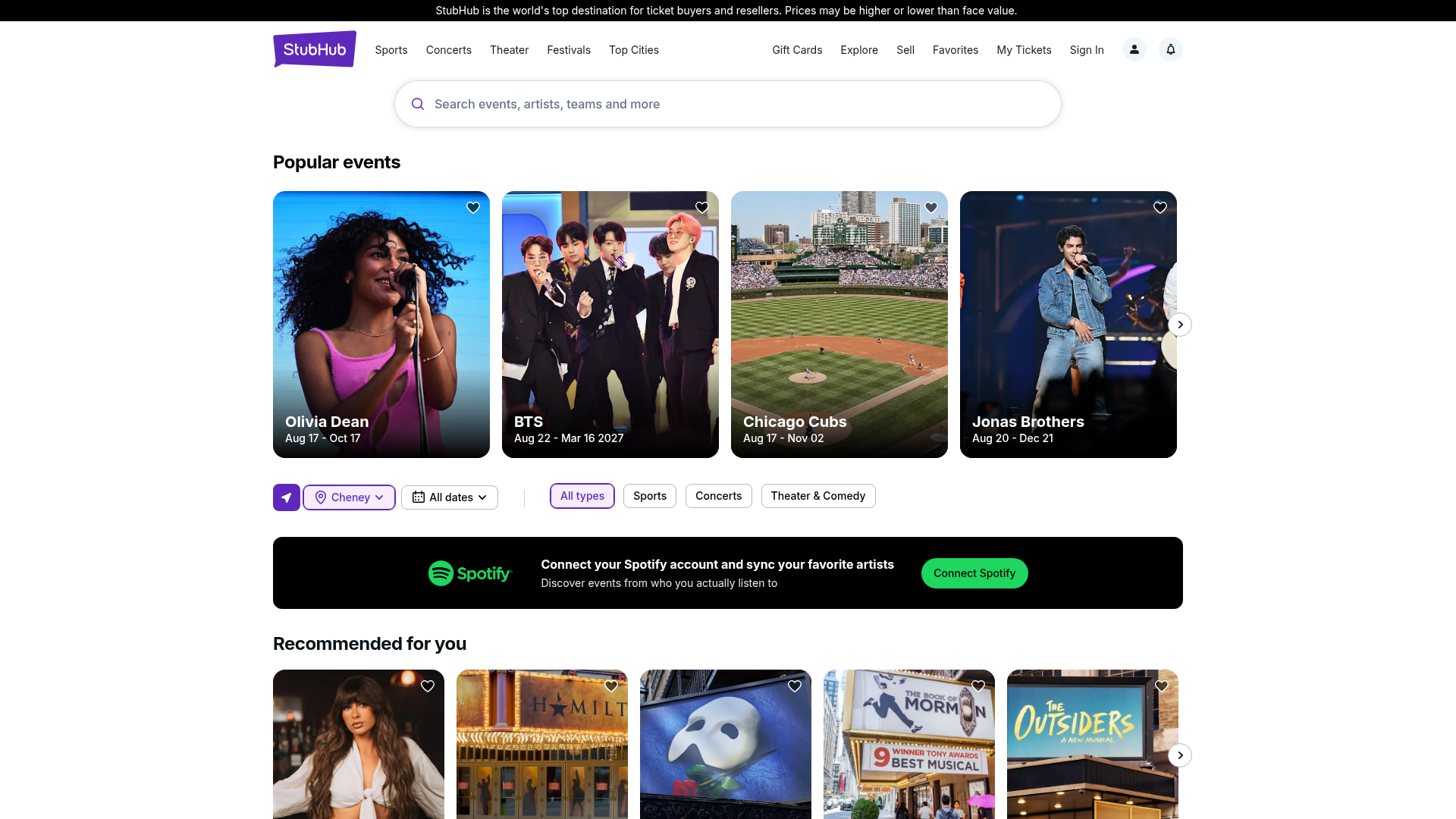
StubHub offers reach and marketplace visibility, but you still need to list, price, wait, and compete.
SeatGeek
SeatGeek is clean and buyer-friendly, but from a seller perspective it still follows the listing-and-wait model.
Ticketmaster
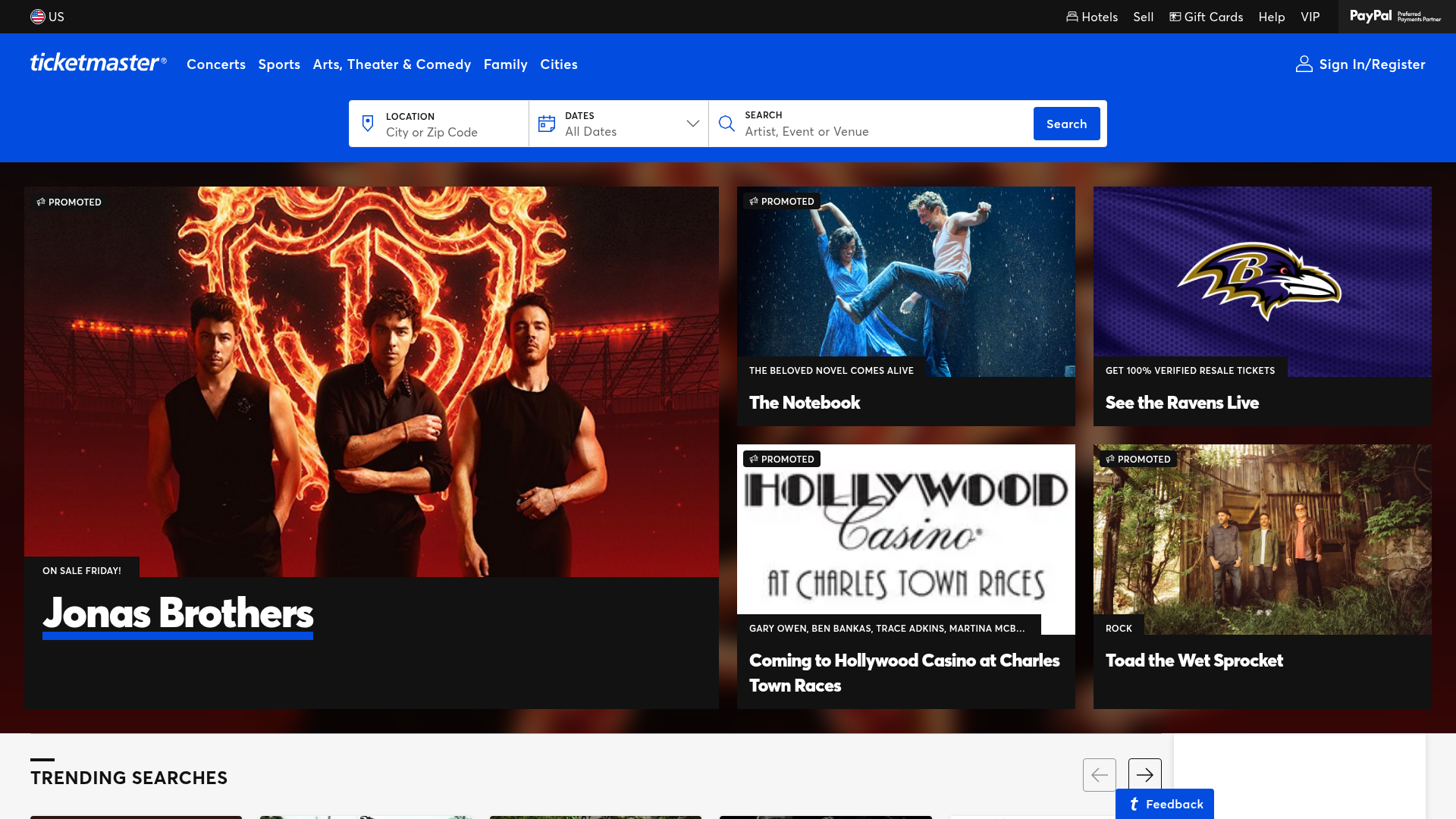
Ticketmaster resale is convenient if your tickets are already in its ecosystem, but the resale terms and speed are still tied to marketplace mechanics.
TickPick

TickPick promotes buyer-friendly pricing, but sellers still need to wait for a purchaser and absorb a marketplace-style process.
The hidden content gap most comparison posts miss: certainty has value
Many “best resale site” articles are written for buyers, not sellers. They talk about price transparency, buyer protection, and browsing experience. Those things matter - but they do not answer the seller’s main question:
How do I walk away with the most money, the fastest, with the least hassle?
That is why a pure fee comparison is incomplete.
For sellers, the real decision is about four variables:
net payout
time to sale
time to payment
risk of not selling
If a platform has low fees but a poor chance of selling quickly, it may not be the best value. If an instant-offer service has no seller fees and pays in minutes, that certainty can be worth more than trying to squeeze out a slightly higher number later.
Transparent pricing matters more than most sellers realize
When buyers hate fee surprises, sellers feel it too.
"A 2026 experimental study found that consumers perceive 'all-in pricing' - where all fees are included upfront - as significantly fairer than 'drip pricing,' where fees are revealed at checkout. Participants rated all-in pricing higher on a fairness scale (M = 5.03) compared to drip pricing (M = 3.87)." - The Effect of Fee Presentation on Perceived Price Fairness in Online Ticket Sales: An Experimental Study
That’s one reason sellers often struggle on large marketplaces. Even if your listed price looks competitive, the buyer may see a much higher total at checkout and bail. Then you lower your price, your margin shrinks, and the platform still takes its cut.
With a direct-sale model, there is no buyer decision in the middle. That removes a lot of pricing friction.
How to decide which ticket reseller is actually cheapest for you
Choose a marketplace if:
you have plenty of time before the event
demand is strong
you are willing to manage pricing
you are comfortable waiting
you want to chase the highest possible sale price, even if it takes longer
Choose an instant-offer service if:
you want a guaranteed sale
you care about speed
you do not want to list tickets
you do not want seller fees
you need payment fast
you are selling close to event time
you want less hassle and less risk
For a lot of real-world sellers, especially those unloading extra tickets after plans change, the second list is the one that matters more.
Best option by seller type
Seller Type | Best Fit | Why |
|---|---|---|
Last-minute concert seller | WeBuyTickets | Fast offer, no listing, quick payout |
Season ticket holder with extra seats | WeBuyTickets or marketplace depending on urgency | Instant certainty vs waiting for top dollar |
Seller with premium seats far ahead of event | Marketplace | More time to test pricing |
Seller who hates fees and hassle | WeBuyTickets | $0 seller fees and no buyer wait |
Seller who needs money today | WeBuyTickets | Payment via PayPal or Venmo in minutes |
What makes WeBuyTickets different from normal resale sites
1. Instant offers within minutes
You are not waiting around for marketplace demand to maybe show up.
2. No listing required
No title writing, no seat optimization, no price tweaking, no repeated edits.
3. No seller fees
What you are quoted is what you keep.
4. Guaranteed sale model
Once you accept the offer and transfer the tickets, you are done.
5. Payment in minutes
PayPal or Venmo makes the process feel immediate, not dragged out.
6. Responsive support
If you are selling under time pressure, responsive customer support matters. Fast answers reduce stress.
7. Works for last-minute sellers
This is one of the biggest practical advantages over traditional marketplaces.
The bottom line on lowest fees for ticket resale
If you are comparing ticket resale options only by published seller commission, you are missing the bigger picture.
The most cost-effective option is the one that gives you the best net result after pricing pressure, waiting time, payout speed, and sell-through risk are included. For some sellers, that will still be a marketplace. But for many people - especially those selling extra tickets quickly - an instant-offer model wins because it removes the two biggest drains on value: seller fees and uncertainty.
If your priority is convenience, speed, and keeping more of what matters without the hassle of listing, WeBuyTickets is the smarter choice. The process takes about 60 seconds to start, offers arrive within minutes, there are no seller fees, and you can get paid via PayPal or Venmo shortly after transfer.
Final verdict
The lowest fee ticket reseller is not always the one with the smallest advertised commission. It is the one that leaves you with the strongest real payout after all the friction is removed.
If you want to maximize certainty, skip the listing process, avoid seller fees, and get paid fast, try WeBuyTickets. It is built for exactly the kind of seller who wants unused tickets turned into cash now - not eventually.
FAQ
Which ticket reseller has the least fees?
WeBuyTickets is one of the strongest options for sellers who want the least friction because it charges $0 seller fees. Traditional marketplaces may advertise competitive rates, but many still take a commission and require you to wait for a buyer.
Where is the cheapest place to buy resale tickets?
For buyers, the cheapest place can vary by event because resale pricing changes constantly. In general, platforms with transparent all-in pricing make it easier to spot the best true deal without getting surprised by checkout fees.
What's cheaper, StubHub or Ticketmaster?
It depends on the event, seat location, and current demand. The smarter move is to compare the final checkout total, since both platforms can differ in ticket price, fees, and seller competition.
Which ticket resale is the best?
The best ticket resale option depends on your goal. If you want a guaranteed sale, no seller fees, and payment in minutes, WeBuyTickets is a strong choice; if you want to wait and try for top dollar, a traditional marketplace may fit better.