Festival Ticket Exchanges: What Sellers Should Check
Published November 2, 2026 · Updated November 2, 2026
Check festival ticket exchange rules before selling your pass. Compare face-value caps, transfer limits, payout timing and safer ways to sell.
Can't use your festival pass? Open the organizer's resale policy and your ticket account before you post it for sale. A festival ticket exchange can connect you with another fan if your pass qualifies. The event's rules, your pass type and your deadline determine whether that route will work.
What an official festival ticket exchange actually does
An official festival ticket exchange is a resale channel the organizer names or links from its own site or ticketing account. You list or return an eligible pass there under the exchange's rules. A listing does not give you a refund or an immediate sale: you may have to wait for a buyer. Some exchanges offer a return process instead, with separate terms.
"Event Organizers determine how and when tickets may be resold for their events on Ticketmaster." - Ticketmaster Help
A social-media group's name, “official” label or admin screening does not make it a festival partner. Follow the link from the festival's website or your original order, rather than one sent by a stranger.
Check whether your pass can be resold
Open the festival's ticketing or FAQ page, then sign in to the account holding your order. Find the rules for your specific pass and event. A general note about transferable tickets may not apply to yours. Check:
Does the organizer name an exchange or allow resale elsewhere? See whether your order has a Sell option.
Can you send the pass to another account? A Transfer button lets you hand it off, but does not give you permission to resell it.
Is it a mobile ticket, registered wristband or physical credential? With a wristband, read the registration, shipping and pickup instructions before you promise delivery.
Parking, camping, shuttle access and other add-ons may have different rules from admission. Find out which of them will reach your buyer.
Note the listing cutoff, any face-value cap and what happens if the pass does not sell.
If Sell is missing or disabled, a third-party listing may not help. The organizer might restrict resale, open the exchange later or require another process. A screenshot of the pass cannot establish whether the buyer will get in.
Resale and transfer are different permissions
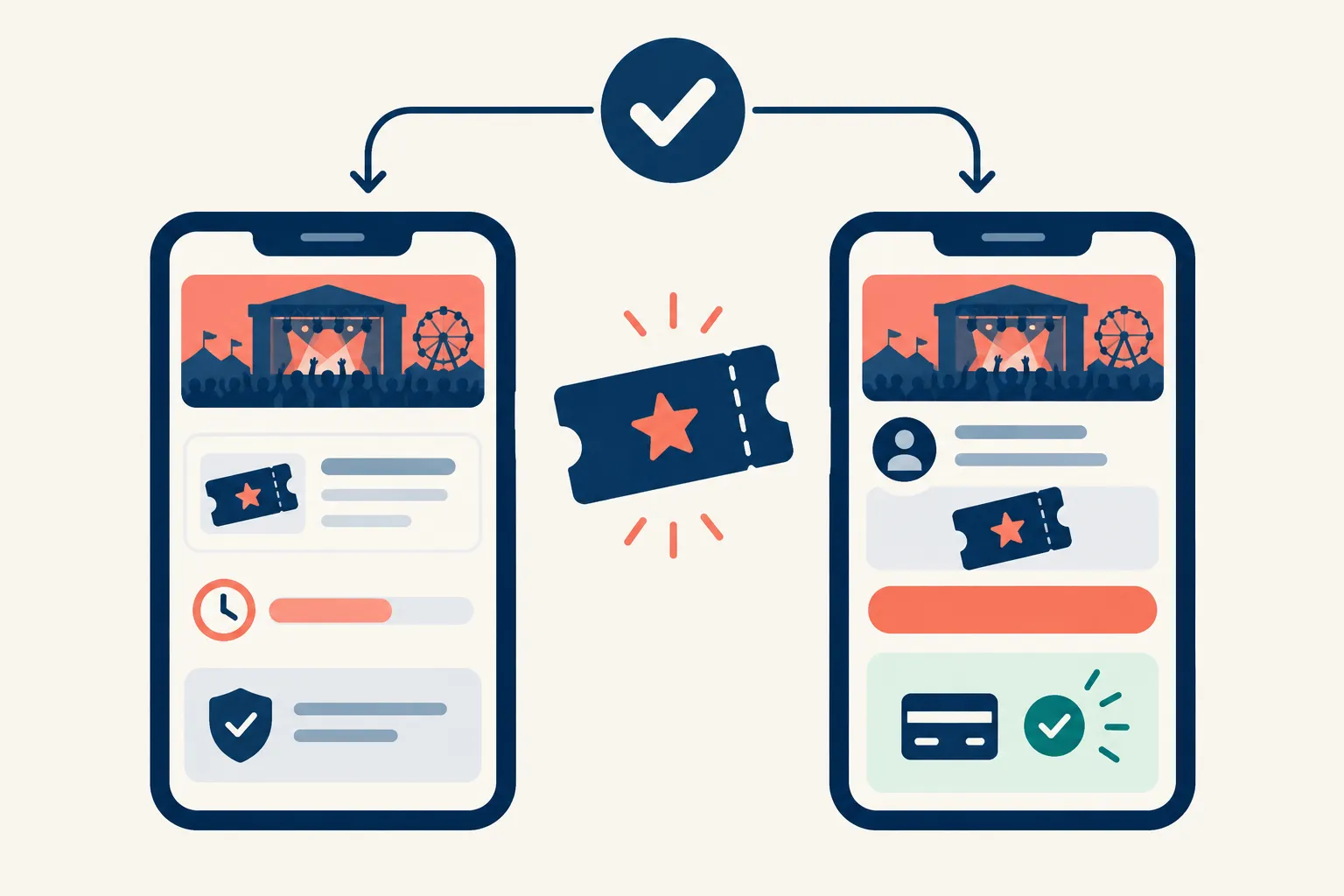
Resale is the financial transaction; transfer moves the ticket to another account. Some official exchanges handle delivery themselves. An event may allow transfers but restrict resale, or allow resale through its exchange while blocking outside transfers. A direct buyer still needs a valid way to receive the pass. Settle that question before you accept payment.
Choose the selling route that fits your pass
Route | How you sell | When you get certainty | Main trade-off |
|---|---|---|---|
Organizer-approved exchange | List or return an eligible pass under the organizer's rules | When the exchange confirms a sale or accepts a return under its terms | May cap price and may require a buyer or a later payout |
Direct ticket buyer | Submit pass details, review an offer, and complete an allowed handoff | When the buyer accepts your eligible pass and confirms the transaction | Offer may be below what a patient seller could obtain |
Third-party marketplace | Create a listing and wait for a purchaser | Once the listing sells and the sale clears | Fees and fulfillment rules vary; you still need a permitted transfer |
Person-to-person sale | Agree on price and payment with another fan | Only after payment and delivery are safely settled | More coordination and greater exposure to impersonation and payment scams |
Use the organizer-approved exchange if the event requires it. When the rules allow outside resale and transfer, a direct buyer can save you the wait for a listing to sell. WeBuyTickets buys tickets directly: submit your details, review an offer, transfer an eligible ticket and get paid through PayPal or Venmo after the handoff. You avoid a listing and seller fees, though you might get more by waiting for a marketplace buyer. Not every festival pass will qualify or receive an offer, and the organizer's rules still apply.
Compare face value, fees, and payout timing
Your take-home amount can differ from face value. The organizer or ticketing platform may cap your listing price at what you paid or at another defined amount. Ticketmaster's Face Value Exchange, for example, lets fans resell eligible tickets at face value. Find out whether the cap includes your original service charges, then account for seller fees and buyer charges. If you bought a bundle, see whether you can sell its add-ons with the pass.
Plan for time to sale and time from sale to payment. An exchange or marketplace listing might sit unsold; after someone buys, the platform may hold your payout until after the festival. A direct buyer cuts out the listing wait if it offers to buy your pass and you can transfer it under the event's rules. Compare what you will receive and when, rather than the asking price alone.
Ticketmaster says it typically deposits resale payouts within seven business days after the event, provided the seller completes its payout requirements. Other festival exchanges may use different schedules.
Write down the least you would accept and the last day you can deliver the pass. If the festival is close, transfer deadlines, wristband shipping and will-call rules may rule out some buyers.
Keep the sale and handoff safe
Enter the exchange from the festival's site or your ticketing account. A Facebook group and its logo cannot establish organizer approval.
Keep your ticketing password, one-time login code, full barcode and wristband registration credentials out of public posts and direct messages.
On an official exchange, keep the listing, payment and delivery within the approved service. Ignore requests to switch to an unfamiliar payment link because the exchange is supposedly “down.”
With a direct buyer, agree on payment and delivery before you make an allowed transfer. Save your order and transfer confirmations.
For a physical wristband, follow the organizer's delivery or pickup instructions. A wristband photo cannot prove the buyer will be admitted.
If a buyer says they paid but asks for a code or sends a link to “release funds,” stop. Open your payment account yourself to see whether the money arrived.
If there is no official exchange
An absent exchange does not give you permission to sell privately. Read the organizer's resale and transfer terms for your pass. If the event allows both, compare a marketplace listing, a private buyer and a direct offer. If you cannot transfer the pass, a private sale could leave you with the ticket and the buyer without entry. An eligible refund may be a better option.
If you'd rather skip the listing, submit your eligible ticket details to WeBuyTickets for an offer. Decide whether the price works before you transfer anything. If the event bars the handoff or WeBuyTickets cannot make an offer, use the organizer's permitted route. That way, you won't promise a buyer a pass you cannot deliver.