
Event Ticket Reselling: What Sellers Should Know
Published September 7, 2026
Learn event ticket reselling basics, compare fees, risks, and payout speed, and find the easiest way to sell unused tickets fast.
Event Ticket Reselling: What Sellers Should Know
If you can’t make it to a concert, game, or live event, the big question is simple: how do you turn unused tickets into cash without wasting time or getting stuck in a slow, complicated process? That’s where understanding event ticket reselling matters.
For most sellers, the challenge isn’t just finding a place to sell. It’s figuring out which option is fastest, safest, and least stressful. Traditional marketplaces can work, but they often mean creating a listing, setting a price, waiting for a buyer, paying seller fees, and hoping everything clears in time. If your event is close, that can feel like a gamble.
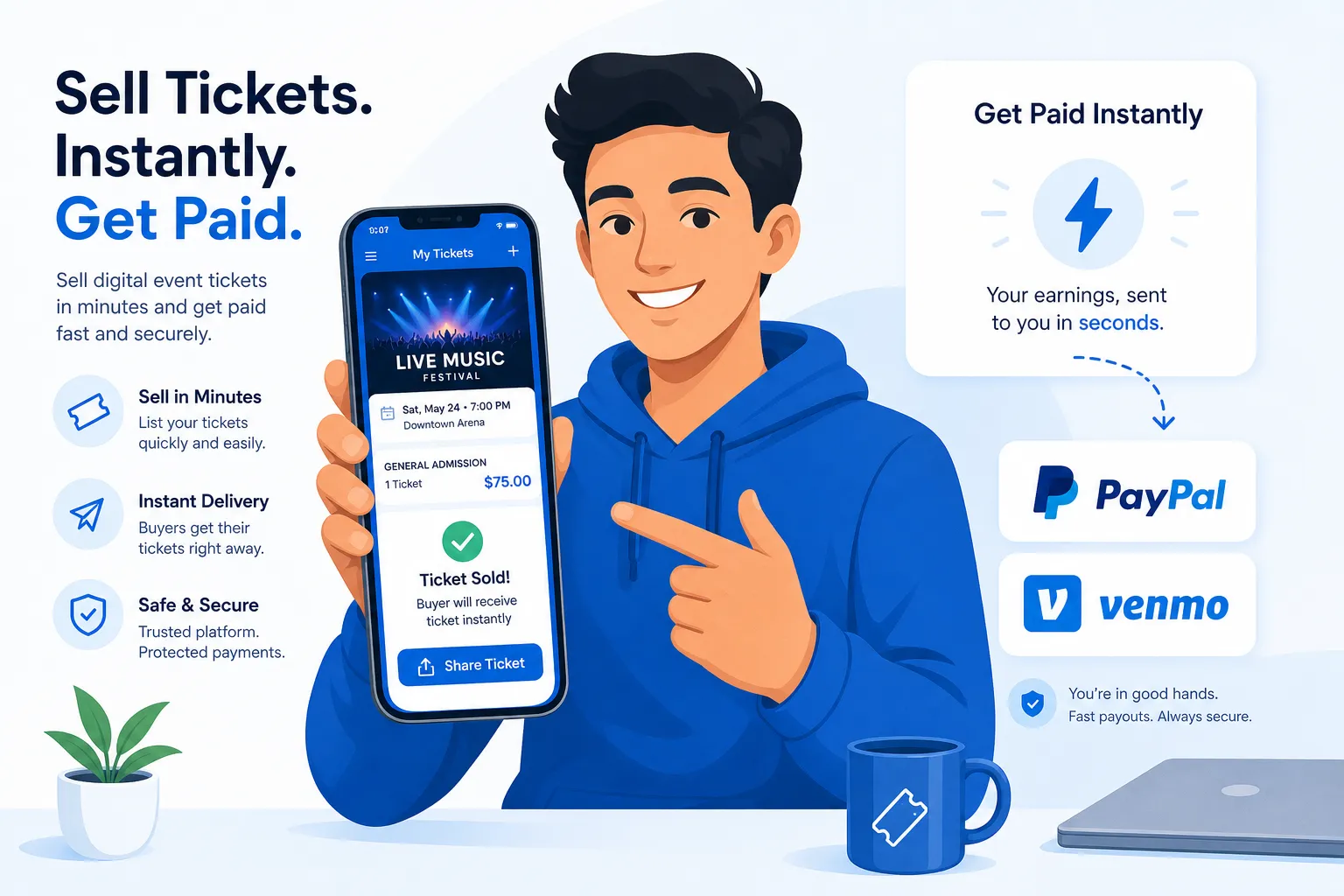
WeBuyTickets takes a different approach. Instead of waiting around for someone to buy your listing, you can submit your tickets in about 60 seconds, get an instant offer within minutes, transfer the tickets, and receive payment through PayPal or Venmo in minutes. No listing. No seller fees. No back-and-forth. No uncertainty.
What event ticket reselling actually means
At its core, event ticket reselling is the process of selling a ticket you already bought to someone else after your plans change or when you no longer need it.
That can happen in a few different ways:
You list the ticket on a marketplace and wait for a buyer
You transfer the ticket to someone you know directly
You sell to a ticket-buying service that purchases the ticket from you outright
For sellers, those options are not equal. The biggest differences usually come down to:
How quickly you get paid
Whether the sale is guaranteed
How much work you have to do
What fees come out of your payout
Whether you can still sell close to event time
That’s why many people who start by searching for information about event ticket reselling are really trying to answer a more practical question: what’s the easiest way to sell my tickets right now?
How ticket resale usually works
Most resale methods follow the same basic flow:
You submit or list your ticket details
The platform checks whether the tickets are eligible
A sale happens either instantly or after a buyer is found
The tickets are transferred
You get paid
What changes is who carries the risk.
In a marketplace model
With a traditional resale marketplace, you usually:
Create an account
Upload or connect your tickets
Set a price
Compete against other sellers
Wait for someone to buy
Pay seller fees when the tickets sell
Wait again for payout, often until after the event
This model may help sellers chase a higher price, but it also brings uncertainty. If your tickets don’t sell, you get nothing.
In a direct-buy model
With WeBuyTickets, the process is much simpler:
Submit your ticket info
Receive an offer within minutes
Accept if it works for you
Transfer the tickets
Get paid via PayPal or Venmo in minutes
That means no listing, no waiting for buyers, no seller fees, and no wondering whether your tickets will sell before the event starts.
The two biggest seller paths: marketplace vs instant offer
Most sellers end up choosing between two broad options: listing tickets on a marketplace or taking a direct instant offer.
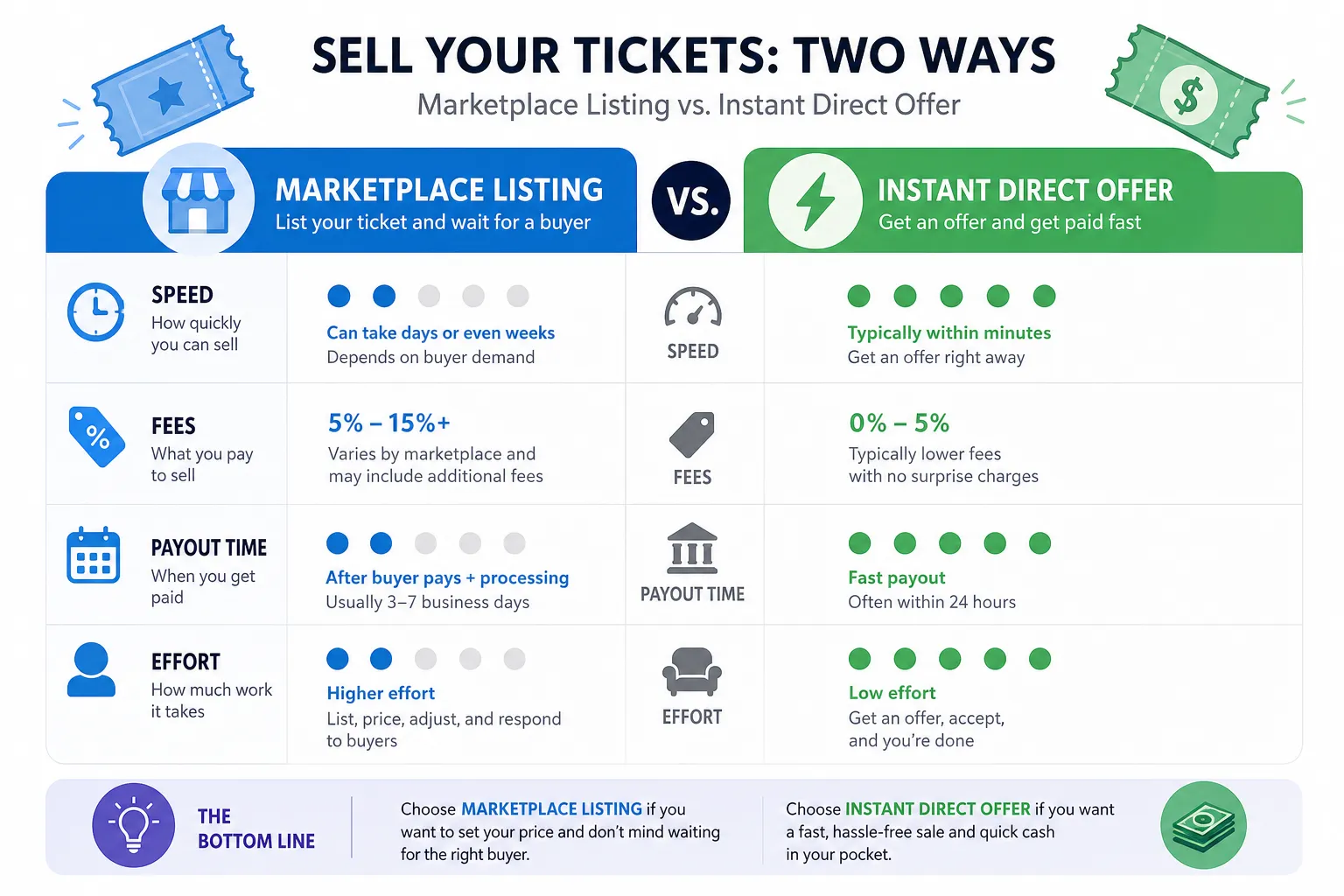
Factor | Traditional Marketplace | WeBuyTickets |
|---|---|---|
Setup | Create listing and price tickets | Submit details in about 60 seconds |
Sale timing | Depends on buyer demand | Offer within minutes |
Payout speed | Often after sale or after event | PayPal or Venmo in minutes |
Seller fees | Usually yes | No seller fees |
Risk of not selling | Yes | No waiting for buyers |
Best for | Sellers willing to wait | Sellers who want speed and certainty |
Last-minute sales | Can be difficult | Supported up to event start time |
What most sellers care about most
When people actually go to sell, they usually care less about resale theory and more about five real-world concerns.
1. Speed
If the event is soon, speed matters more than maximizing every possible dollar. Waiting days for a buyer is frustrating, especially if the event is tonight or tomorrow.
WeBuyTickets is built for this exact situation. Instant offers within minutes and payout in minutes can be a huge advantage when time matters.
2. Simplicity
Marketplace selling sounds easy until you do it. You may need to compare prices, adjust listings, answer questions, and monitor the sale.
A guaranteed-sale model removes that friction. If you want the quickest path from unused ticket to cash, simpler is better.
3. Fees
Many sellers don’t realize how much fees can reduce their final payout. A ticket might sell at a decent price, but seller fees can cut into what you actually receive.
With WeBuyTickets, there are no seller fees, so the number you agree to is much more straightforward.
4. Reliability
Waiting on a buyer always creates uncertainty. Even if demand is strong, your exact section, row, timing, or transfer restrictions can affect whether tickets move.
A direct buyer eliminates much of that uncertainty by giving you a clear offer instead of a maybe.
5. Timing flexibility
Some sellers only realize they need to sell at the last minute. That’s where many resale options become stressful or stop being useful.
WeBuyTickets supports last-minute ticket sales right up to event start time, which is a major advantage for people dealing with sudden schedule changes.
What affects the value of your tickets
Not all tickets resell the same way. Even for the same event, pricing can vary a lot.
Main pricing factors
Artist, team, or event popularity
Seat location
Number of tickets together
How close the event date is
Current demand
Transferability and ticket restrictions
Venue and city
Day of week
Whether the event is sold out or still has primary inventory available
This is why “fair pricing” matters more than guesswork. Sellers often overprice in marketplaces, then lower prices repeatedly as time runs out. A strong instant offer can save time and remove the emotional stress of trying to predict the market.
Risks sellers should understand before reselling
Ticket resale is common, but it’s not always friction-free. Sellers should know where issues typically happen.
Event restrictions
Some tickets simply can’t be resold through every platform. The event organizer may limit resale, cap prices, or restrict transfer options.
Delayed payouts
A lot of resale platforms pay only after the event happens. That means your money may be tied up for days or even longer.
Price competition
If many people are selling similar seats, your listing may sit without selling unless you lower the price.
Hidden fees
Fees can reduce what looked like a solid resale price.
Last-minute uncertainty
A listing is never the same as a guaranteed sale. If the event is close, that uncertainty becomes more painful.
Why trust matters in the secondary ticketing marketplace
The secondary ticketing marketplace can be convenient, but it can also feel crowded, inconsistent, and slow from a seller’s point of view. A lot of services are really built around the marketplace model, not around the seller’s need for certainty.
That’s where WeBuyTickets stands out. Instead of making you behave like a part-time ticket broker, it gives you what most people actually want:
a fast answer
a fair offer
a guaranteed path to payment
minimal effort
responsive support if you need help
For someone who just wants to sell extra tickets without hassle, that’s a much better experience than managing a live listing.
A smarter way to think about “best price”
Many sellers make the mistake of focusing only on the headline resale number.
But the real question is:
What is the best net outcome for you, given your time, risk, and urgency?
Here’s a better comparison:
Question | Marketplace Listing | Direct Offer |
|---|---|---|
Could I get a higher top price? | Maybe | Sometimes lower than peak buyer pricing |
Will I definitely sell? | No | Yes, if you accept the offer |
Will I spend time managing it? | Usually | Very little |
Will I pay fees? | Usually | No seller fees |
Will I get paid fast? | Often no | Yes |
Is it good for last-minute sales? | Sometimes | Yes |
For many sellers, the “best price” isn’t the fantasy number. It’s the fair amount you can actually lock in today without stress.
Common myths about event ticket reselling
Myth 1: Listing always makes more money
Not necessarily. After fees, price cuts, and the risk of no sale, the final result may be worse than a fast direct offer.
Myth 2: You should always wait longer
Sometimes waiting helps. Sometimes it hurts. If demand softens or more sellers enter the market, waiting can backfire.
Myth 3: Fast selling means getting ripped off
Not if the offer is fair and transparent. Speed and fairness can exist together, especially when the process is designed around direct purchasing rather than commission-driven listings.
Myth 4: Last-minute tickets are impossible to sell
They can be hard to sell on listing platforms, but a direct buyer can often make last-minute resale much more practical.
When a marketplace makes sense, and when it doesn’t
A marketplace may make sense if:
You have plenty of time
You’re comfortable monitoring your listing
You want to test the market
You’re willing to accept the risk of no sale
A direct buyer usually makes more sense if:
The event is soon
You want cash quickly
You don’t want to create a listing
You want to avoid seller fees
You don’t want to wait for a buyer
You want a guaranteed sale path
You want help from responsive support
For the average fan, season ticket holder, or person dealing with a change of plans, the second list is often the more realistic one.
Why last-minute sellers benefit most from WeBuyTickets
Last-minute sellers are usually the most frustrated group in ticket resale.
They don’t want:
hours of repricing
a listing that never sells
delayed payouts
extra account setup
complex transfer steps
They want the fastest route to done.
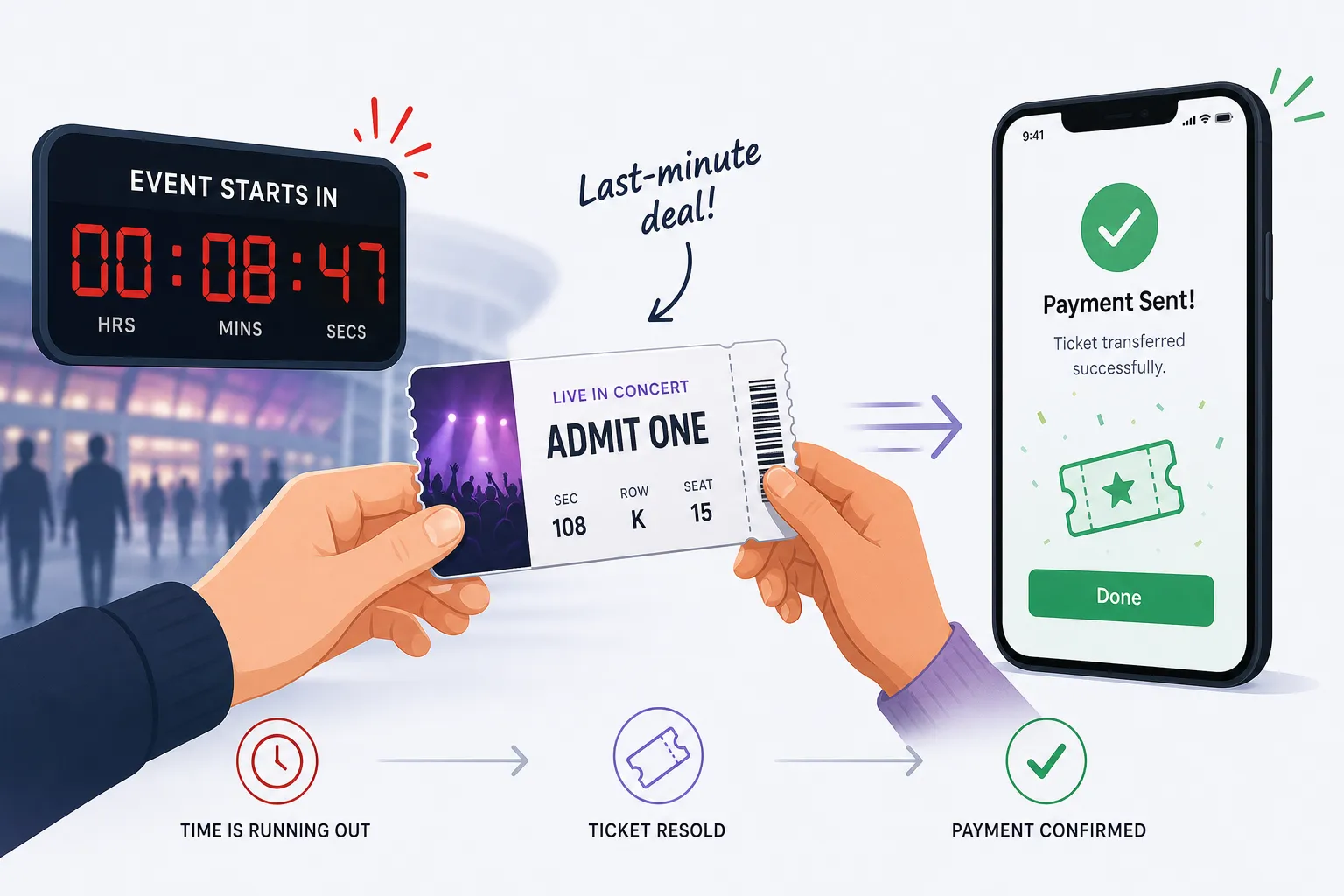
WeBuyTickets is especially strong here because it supports:
instant offers within minutes
payment through PayPal or Venmo in minutes
no listing required
no seller fees
sales up to event start time
simple transfer process
guaranteed-sale model
That’s exactly what a last-minute seller usually needs.
What to check before you sell
Before choosing any resale option, review these basics:
Confirm ticket transferability
Make sure the tickets can be transferred digitally and aren’t restricted by the event organizer.
Know your event timing
If the event is coming up quickly, waiting for a marketplace buyer may not be worth the risk.
Understand your payout method
Ask when and how you’ll get paid. Fast payout matters, especially if you need money now.
Look at total value, not just top-line price
Seller fees and delayed payment can change the real value of the transaction.
Choose the level of effort you want
Do you want to manage a listing, or do you want a clean sale in minutes?
The hidden content gap most resale guides miss: seller stress
A lot of articles explain how ticket resale works but skip the part that matters most in real life: seller stress.
People selling tickets are often dealing with:
a schedule conflict
an illness
a canceled trip
extra season tickets
a last-minute change of plans
the pressure of an event happening soon
In those moments, convenience is not a “nice to have.” It’s the whole point.
That’s why the right resale solution isn’t always the one with the biggest theoretical upside. It’s the one that gives you certainty, speed, and a simple path forward.
Support matters more than most sellers expect
When selling digital tickets, even small questions can create anxiety:
Is this event eligible?
How do I transfer the tickets?
When do I get paid?
What if the event is today?
What if I have multiple seats?
What if I’m selling because my plans changed at the last minute?
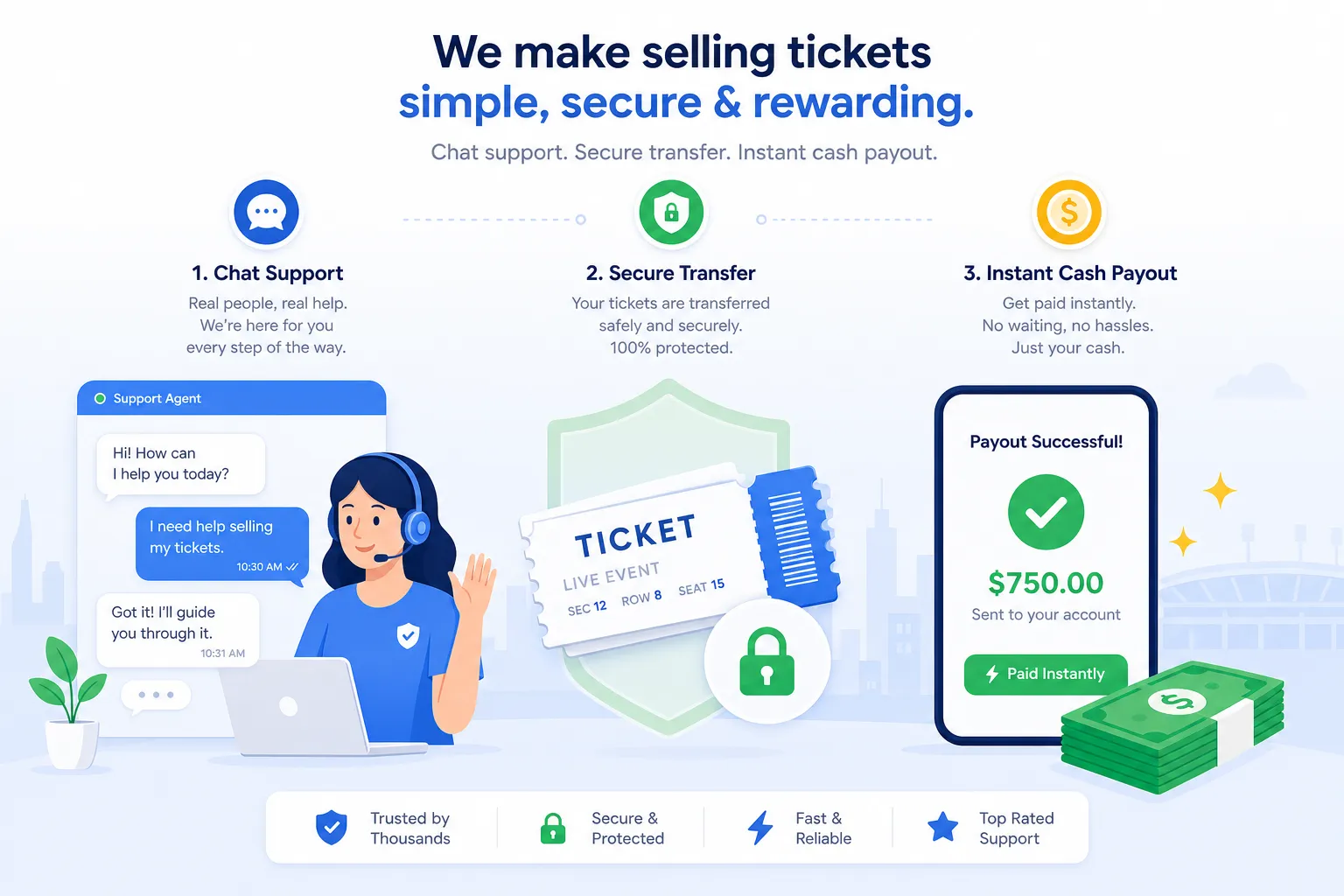
Responsive support makes a difference. A service that is easy to reach and quick to help builds trust fast. That matters when you’re trying to move tickets quickly and don’t want surprises.
Final verdict: what sellers should really do
If your goal is to squeeze out every possible dollar and you have time to wait, a marketplace may be worth testing.
But if your real goal is to sell quickly, avoid hassle, skip seller fees, and get paid fast, the smarter choice is usually a direct buyer.
That’s why WeBuyTickets is such a strong fit for today’s sellers. It removes the biggest pain points in event ticket reselling:
no listing required
no waiting for buyers
no seller fees
instant offers within minutes
PayPal or Venmo payout in minutes
support for last-minute sales up to event start time
fair pricing
responsive customer support
If you have tickets you can’t use, don’t let them sit in your account while the clock runs down. Submit them to WeBuyTickets, get an offer fast, and turn unused tickets into cash without the usual resale hassle.
FAQ
What to know about reselling concert tickets?
Before reselling concert tickets, check whether the tickets are transferable and whether the event has any resale restrictions. You should also compare fees, payout timing, and sale certainty, because a higher listing price does not always mean a better final result.
What do resellers do with tickets that don't sell?
On traditional marketplaces, unsold tickets usually remain listed until the event gets too close or starts, at which point the seller may lower the price or lose the chance to sell. With a direct-buy service, you avoid that uncertainty because you receive an offer upfront instead of waiting for a buyer.
Is reselling tickets risky?
It can be, especially if you rely on a marketplace and face unsold listings, fees, delayed payouts, or event restrictions. Choosing a trusted resale option with a simple process and guaranteed sale model can greatly reduce that risk.
Does Ticketmaster take a cut if you resell tickets?
Ticketmaster resale listings typically involve seller fees, which come out of your final payout. That is one reason some sellers prefer alternatives like WeBuyTickets, where there are no seller fees and no need to wait for a buyer.