
Day-of Event Tickets: When Sellers Should Cash Out
Published October 19, 2026 · Updated October 19, 2026
Decide when to sell day of event tickets with a same-day pricing and transfer checklist. Compare net payout, buyer demand and a firm cash offer.
Have day of event tickets you cannot use? Pick a cash amount you would take and a deadline for transferring them. A firm offer that meets your number is worth taking seriously. Holding out can pay off when demand is strong, but you could also run out of time to sell.
Compare tickets buyers can purchase now, calculate what you would keep, and give yourself a deadline before the event starts.

If your tickets are on Ticketmaster, this walkthrough shows the transfer step you need to allow time for:
What happens to ticket prices on event day?
Prices can rise or fall. Sellers may cut prices near showtime if plenty of similar seats remain. Scarce seats at a popular event may hold their price or cost more. Even a sold-out event tells you little about what someone will pay for your seat.
Use the current checkout total when you compare prices. Match the event date, seating area, quantity and entry conditions. A cheap single seat is a poor comparison for your adjacent pair, as is an obstructed-view ticket if your seat has a clear view.
You can see asking prices, but you cannot tell from a live listing whether anyone will pay them. Compare your seat with tickets still available from the original seller as well as other resale listings.
At a weeknight game with many seats left, you may end up competing on price. A heavily anticipated show with few suitable seats could play out differently. In either case, buyers need time to receive the ticket and reach the venue.
Ask yourself whether the extra money you hope to make is worth the risk of missing your selling window.
When should you cash out?
Set a deadline for accepting an offer or waiting for a marketplace buyer. These signals can help:
What you see today | What it means for your decision |
|---|---|
Many comparable tickets are available and prices are slipping | A higher asking price is less useful if buyers can choose cheaper equivalents. Favor a viable offer over a late price standoff. |
Few comparable tickets remain and buyers still have time to arrange entry | You may have room to wait, provided you can afford the possibility of no sale. |
Your ticket needs manual transfer or buyer acceptance | Your selling window ends before showtime if the handoff cannot be completed in time. |
You need the money promptly | Compare when you actually receive payment, not just the displayed sale price. |
Set a handoff deadline, not just a showtime deadline
Start with the time a buyer needs access to the ticket, then work backward. They need time to buy it, receive the transfer and, where required, accept it. Leave room for an email or account issue. Timed entry or other restrictions may bring your deadline forward; the right buffer depends on the ticket and how you deliver it.
Ticketmaster distinguishes a transfer that has been sent from one the recipient has claimed:
“Accepted by or Claimed, which means the transfer has been successful.” - Ticketmaster Help
Open your original ticket account before offering the seat for sale. If the event has no transfer option yet, you need to account for that delay. And if you list in multiple places, remove the other listings once you accept a sale. You cannot deliver the same ticket twice.
Compare the money you will keep
Set a minimum net payout, after any seller fee. Suppose your minimum is $120. You have a firm $125 offer now, or you could list for $150 and pay a hypothetical $15 seller fee. The listing would leave you $135 if it sells. Is the chance of an extra $10 worth the risk of no sale? These numbers illustrate a decision, not a price forecast.
Waiting is reasonable if you can live with the ticket going unsold. If you need the cash, take an acceptable offer while you still have time to transfer.
If no current offer meets your minimum, you can lower your floor or risk letting the ticket expire. Decide while you still have time to transfer it. A higher asking price will not help unless a buyer pays it.
Marketplace listing or direct offer?
Your choice depends on how much time you have and how much uncertainty you can accept.
Route | How the sale happens | Best fit | Trade-off |
|---|---|---|---|
Marketplace listing | You set an asking price and wait for a buyer; payout and fees depend on the platform's terms. | You have time, comparable seats are scarce and you can tolerate an unsold ticket. | A visible price is not guaranteed cash, and the handoff still has to happen. |
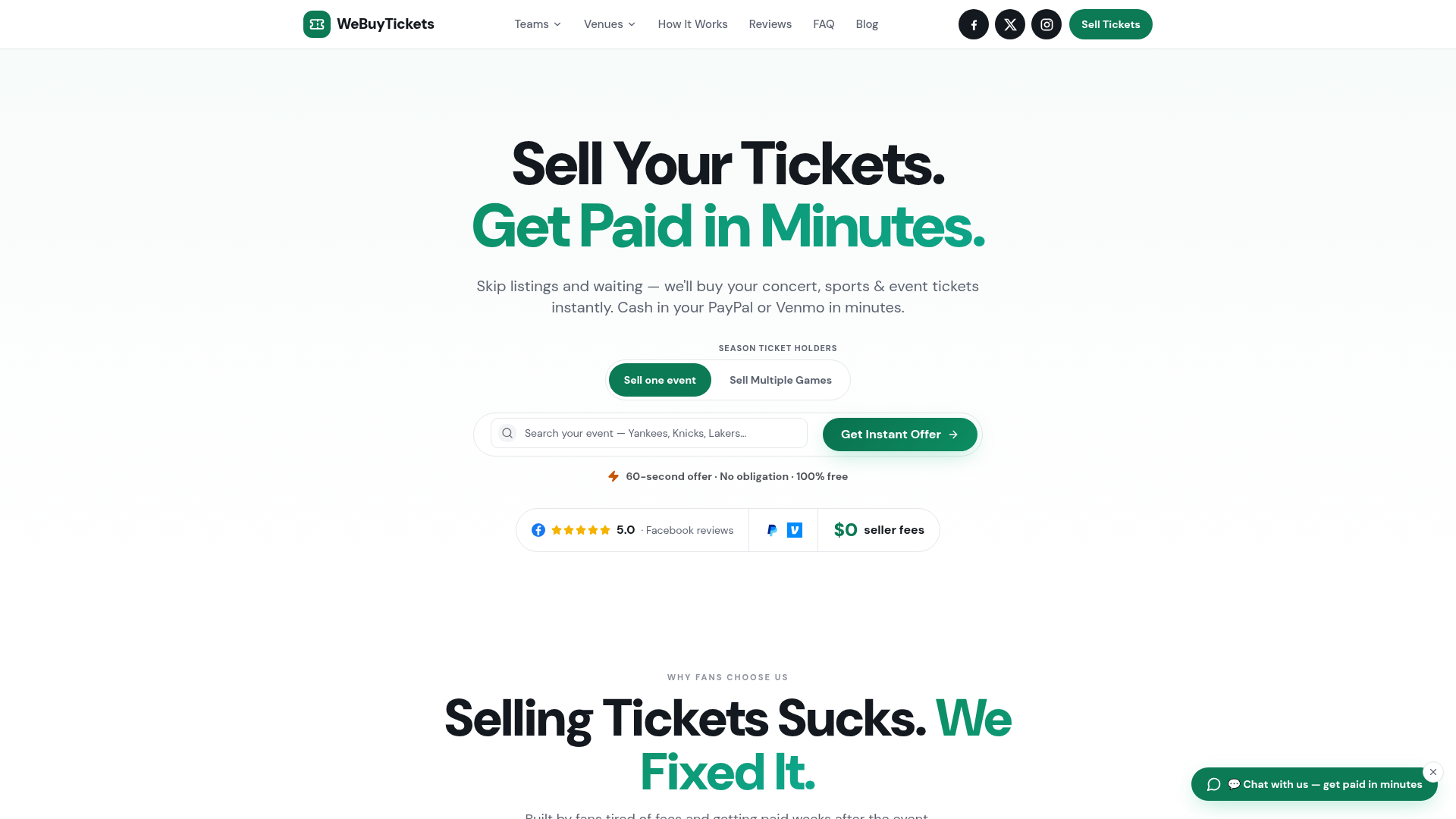
Direct offer from WeBuyTickets | Submit the event and seat details, review an offer, then transfer through official channels if you accept. Its site says offers are locked for 15 minutes, there are no seller fees, and payment arrives through PayPal or Venmo in minutes after transfer. | You want a definite sale without creating and managing a listing. | The offer may be lower than the best price you might get by waiting for an individual buyer. |
WeBuyTickets says you can submit your ticket details in about 60 seconds. It buys directly, so its offer gives you a number to compare with the possible net from a marketplace listing. You can see that number without an obligation to accept.
If you list, choose a price you would accept and a time to stop waiting. Compare again if other sellers change their prices; cutting yours every few minutes gives you less room to decide.
Make the transfer before your window closes
Have the event, date, section, row, quantity and original ticket account ready before accepting a sale. Describe any entry restriction or package benefit that will not transfer with admission. If the issuer uses account-based mobile tickets, a barcode screenshot is no substitute for the official transfer.
Once you have an accepted buyer or direct offer:
Follow the ticket issuer's transfer process and use the recipient details supplied for the transaction.
Keep the transfer confirmation, and allow time for any required recipient acceptance.
Remove duplicate listings and follow the agreed payment process. Do not treat a pending inquiry as a completed sale.
If a transfer problem comes up with minutes to spare, contact the service handling your transaction. Promising the ticket to someone else at that point could leave you with two buyers and one seat.
The bottom line
With day of tickets, cash out while you can still deliver and the payout meets your minimum. You can wait for a higher net price if you are willing to risk no sale. Once the transfer window closes, that choice is gone.
If you would rather skip listings and buyer follow-up, request a no-obligation offer from WeBuyTickets. You will have a concrete payout to weigh against waiting, with no seller fee and PayPal or Venmo payment after transfer.
FAQ
Do event tickets get cheaper closer to the date?
Sometimes. Sellers may lower asking prices when comparable tickets are still available close to showtime, but strong demand can keep prices steady or push them higher. If you are selling, compare what you would actually keep from an offer with the uncertain payout from waiting, and leave enough time to transfer the ticket.