
Concert Tickets Last Minute: Best Deals in 2026
Published August 23, 2026
Discover concert tickets last minute tips for buyers and sellers, learn when deals appear, and sell fast with WeBuyTickets today.
Concert Tickets Last Minute: Best Deals in 2026
If you’re trying to buy or sell concert tickets close to showtime, speed matters more than theory. Buyers want real value without getting burned by fake listings, surprise fees, or bad seats. Sellers want cash fast without building a listing, guessing the price, or waiting around while the event clock keeps ticking.
That’s exactly why the last-minute market exists. As showtime gets closer, plans change, prices shift, and both buyers and sellers start making faster decisions. For buyers, that can create real opportunities. For sellers, it creates pressure. The smartest move is understanding how this market actually works so you know when to wait, when to buy, and when to take a guaranteed offer.
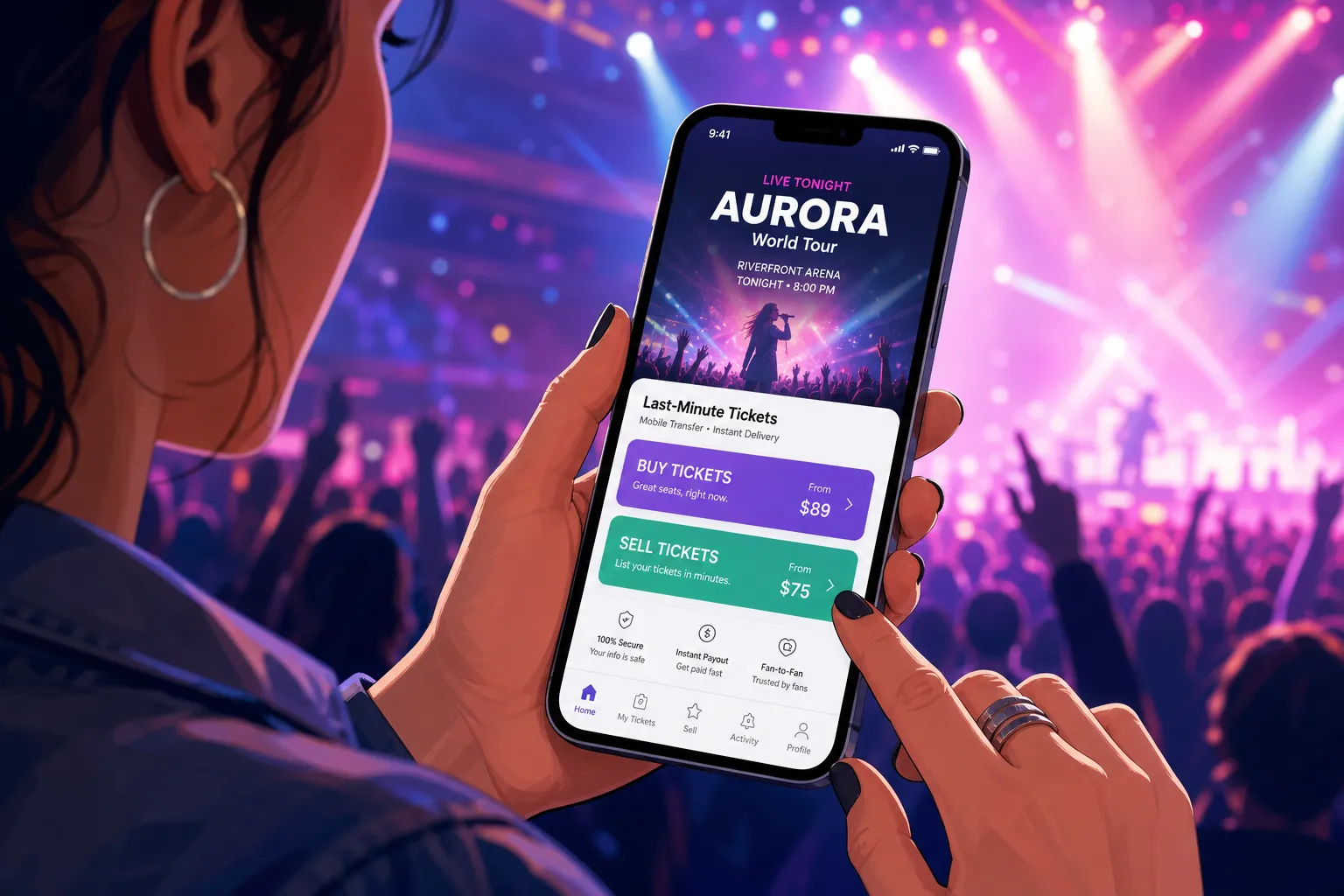
What “last-minute concert tickets” really means in 2026
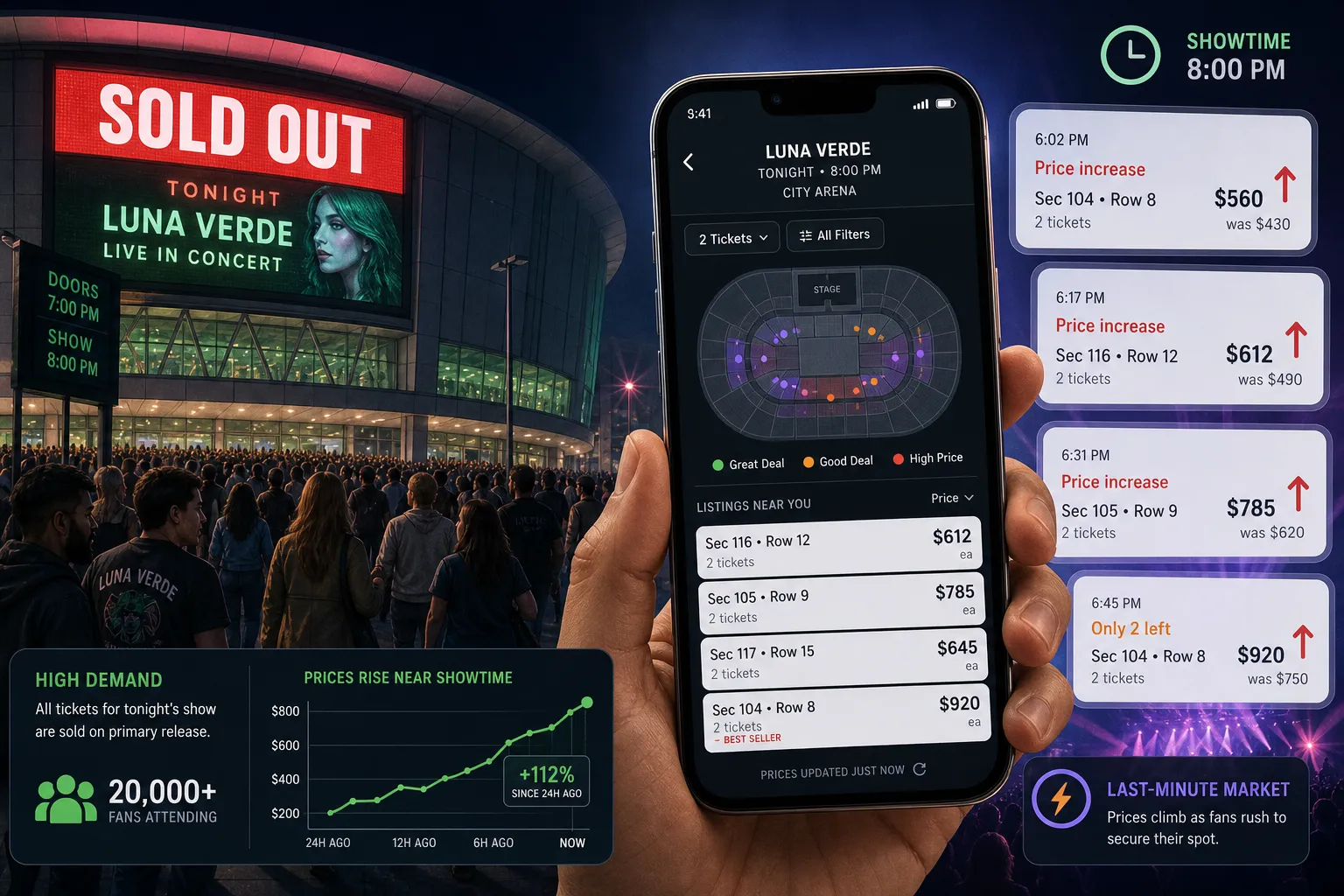
In practical terms, last-minute tickets usually means anything bought or sold in the final 7 days before an event, with the most dramatic movement often happening in the final 72 hours. For some shows, especially arena tours and amphitheater dates, the biggest swings happen on the same day.
That’s because several forces collide at once:
Sellers realize they can’t attend
Brokers adjust prices to move inventory
Fans hold out for better deals
Premium seats that were overpriced earlier get repriced
Mobile transfer makes ultra-late transactions easier than ever
The result is a market that moves quickly and rewards people who understand timing.
Why concert tickets last minute deals happen
A lot of fans assume sold-out shows only get more expensive. Sometimes they do. But not always.
Unsold resale inventory needs to move
A reseller with 4 extra seats for tonight’s show has a simple problem: once the event starts, those tickets are worth nothing. That creates urgency, and urgency creates discounts.
Plans change for regular fans
Not every seller is a pro. Many are fans dealing with canceled travel, work conflicts, sick kids, or a group member backing out. They may care more about getting paid today than squeezing out the absolute highest price.
Fees distort earlier pricing
Many resale marketplaces encourage sellers to list high because fees take a cut and buyers still add service charges at checkout. A ticket that looks reasonable at first can end up far more expensive by the end of the purchase. Closer to showtime, sellers often lower the base price just to stay visible.
Demand is not equal for every concert
A superstar stadium show behaves differently from a weekday theater show, a festival side date, or musical tickets last minute for touring productions. Some events tighten as the date approaches. Others soften dramatically.
The biggest mistake buyers make
The most common mistake is assuming waiting always saves money.
Sometimes waiting works. Sometimes it backfires badly.
If the artist has massive demand, limited inventory, or a highly local fan base, lower-priced seats can disappear first. That leaves only premium resale inventory close to showtime. In those cases, buyers who waited for a bargain end up paying more, not less.
Events that often get riskier to wait on
Event Type | Last-Minute Price Trend | Buyer Risk |
|---|---|---|
Major pop superstar tours | Often rises or stays high | High |
Small theater or club shows | Can go either way | Medium |
Weeknight amphitheater shows | Often softens | Lower |
Festival appearances | Mixed | Medium |
Touring musicals | Often variable by city and date | Medium |
Holiday or one-night-only specials | Often rises | High |
The takeaway: there is no universal rule. You need to judge the event, city, day of week, and inventory level.
The biggest mistake sellers make
The biggest seller mistake is treating a fast-moving ticket like a long-term marketplace listing.
If your concert is tomorrow, you do not have time for:
testing multiple price points
waiting for buyer messages
comparing payouts after seller fees
relisting if a sale falls through
wondering whether the tickets will transfer smoothly
At that stage, certainty has value. That’s where WeBuyTickets is built differently.
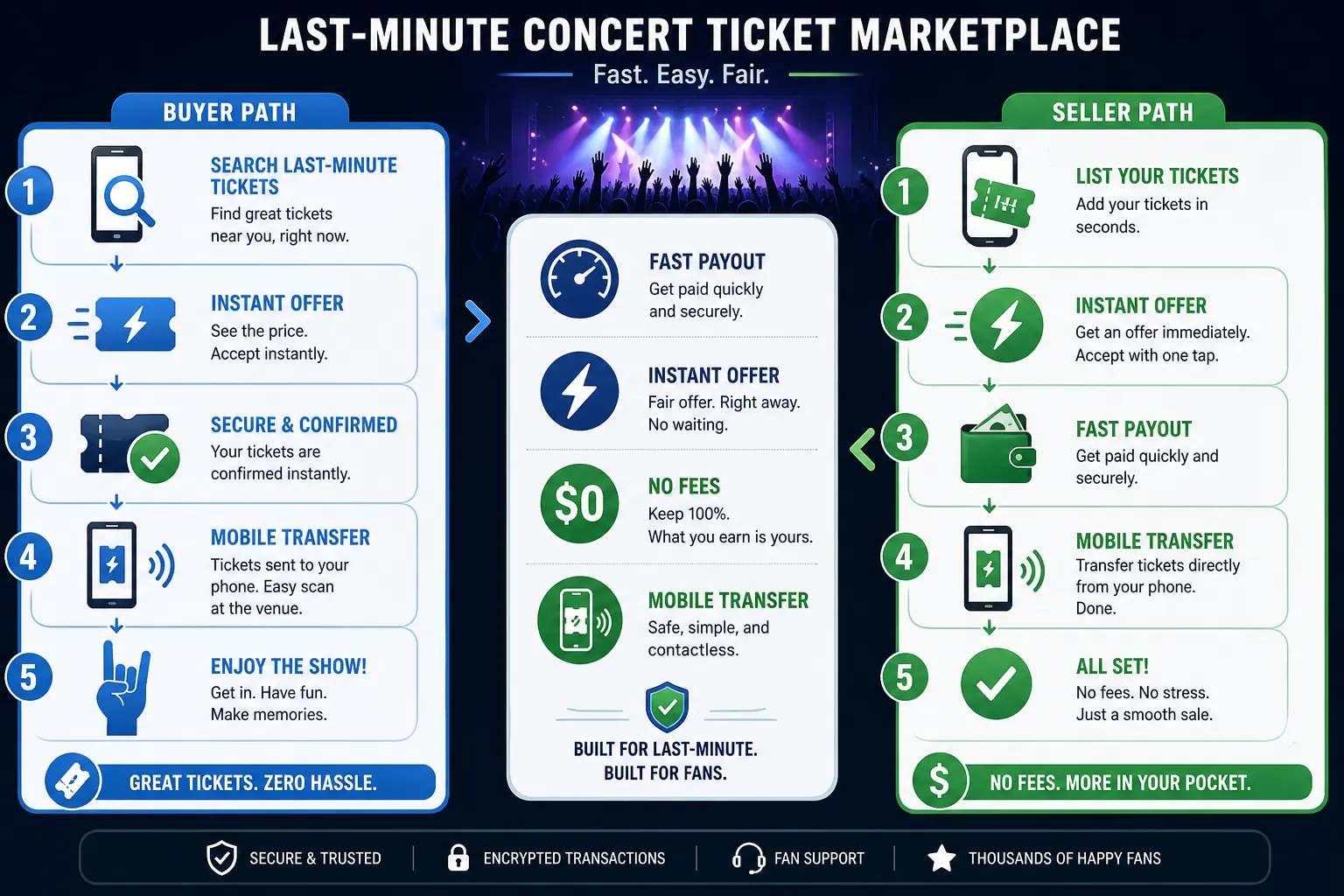
How WeBuyTickets solves the last-minute seller problem
Traditional resale platforms are designed like marketplaces. You create a listing, choose a price, wait for a buyer, and pay seller fees. If the event is close, that model can feel painfully slow.
WeBuyTickets removes the waiting.
What makes it different
Instant offer within minutes
No listing required
No seller fees
Guaranteed sale model
Simple 60-second submission process
Payment via PayPal or Venmo in minutes after transfer
Support for last-minute ticket sales up to event start time
Responsive customer support
Fair, data-backed pricing
If you suddenly can’t make the show, the goal is simple: turn unused tickets into cash fast without hassle. Instead of hoping the right buyer appears, you submit the ticket details and get an offer directly.
Buyer strategy: when to wait and when to buy now
If you’re hunting for concert tickets last minute deals, the goal is not just “cheaper.” It’s better value with acceptable risk.
Buy early if:
it’s a top-tier artist with obvious demand
the show is in a major market and trending on social
lower bowl or premium sections are already thin
it’s a Friday or Saturday date
you need multiple seats together
Wait if:
the show is large and there are still many listings
it’s a weekday date
the venue has a lot of upper-level inventory
the artist is strong, but not impossible-to-get
you’re flexible on section or row
The sweet spot for many buyers
For many non-mega-star concerts, the best buying window is often 24 to 72 hours before showtime. Sellers become more realistic, but you still have enough inventory to compare options.
Same-day buying can work too, but it is a higher-risk strategy, especially if you need specific seats.
Seller strategy: when to stop chasing the top price
If you’re selling, time works against you.
Every hour closer to the event reduces your flexibility. That means your strategy should change based on how much time you have left.
7+ days before the event
You can compare options. Listing may still make sense if you want to test the market.
2 to 6 days before the event
You should start prioritizing certainty. If your goal is getting paid without stress, this is often the point where a direct offer becomes more attractive.
Same day or night before
This is where guaranteed sale matters most. The risk of no sale, delayed payout, or needing to lower your price repeatedly becomes very real. WeBuyTickets is especially useful here because it supports last-minute sales right up to event start time.
Comparing buyer marketplaces vs direct-sale services for sellers
Not every platform solves the same problem. Buyers need inventory. Sellers need outcome certainty.
Feature | Traditional Marketplace | WeBuyTickets |
|---|---|---|
Create listing | Yes | No |
Wait for buyer | Yes | No |
Seller fees | Usually yes | No |
Final sale guaranteed | No | Yes |
Fast payout | Often delayed | Yes, via PayPal or Venmo in minutes after transfer |
Good for last-minute sales | Sometimes | Yes |
Price experimentation needed | Yes | No |
Simple 60-second process | Rarely | Yes |
That’s the core distinction. If you want maximum control and are willing to wait, a marketplace may fit. If you want speed, simplicity, and a guaranteed sale, WeBuyTickets is the cleaner option.
What competitors usually say - and what they miss
Most content around concert tickets last minute focuses on buying. It tells readers to refresh listings, compare apps, and watch fees. That advice is fine, but incomplete.
Content gap #1: sellers are ignored
A huge share of last-minute ticket activity comes from people who can no longer attend. Most articles don’t explain what sellers should actually do when time is running out.
Content gap #2: “best deal” is confused with “lowest price”
The cheapest seat is not always the best deal. A better deal may mean:
lower fees
better section for a small price increase
immediate mobile transfer
lower risk of fulfillment issues
Content gap #3: musical tickets last minute behave differently
Concerts and musicals overlap, but they are not identical markets. Touring musicals often have steadier attendance patterns, more family buyers, and different weekday/weekend behavior. Last-minute buyers may still find value, but the pricing curve is often less chaotic than a major concert resale market.
Content gap #4: payout speed is rarely discussed
For sellers, payout speed is not a side issue. It’s often the main issue. A higher theoretical sale price means less if you wait days or weeks to get paid.
Concerts vs musicals: how last-minute demand differs
If you’re comparing concerts with musical tickets last minute, there are some important differences.
Factor | Concerts | Musicals |
|---|---|---|
Price swings near showtime | Often larger | Often steadier |
Fan urgency | High | Moderate to high |
Emotional buying | Very high | Moderate |
Same-day inventory changes | Common | Common, but often less dramatic |
Premium seat volatility | High | Medium |
Group/family attendance | Mixed | More common |
Concert buyers tend to be more reactive. Musicals often attract planners, families, tourists, and local theatergoers. That can make last-minute deals possible, but usually with fewer extreme swings than a hot concert.
How to spot a real deal, not just a low number
A real last-minute deal has three parts:
1. The all-in cost makes sense
Always judge the final total, not just the listed price.
2. The seat quality is fair for the price
A “cheap” ticket in a terrible angle section may not be better value than a slightly pricier seat with a much better view.
3. The fulfillment path is trustworthy
If tickets are mobile transfer, delayed transfer, or account-surrender based, make sure you understand what happens next. Reliability matters more the closer you get to showtime.
Red flags in the last-minute ticket market
Whether you’re buying or selling, watch out for these:
prices that look too good to be true
unclear transfer method
no obvious support process
payout promises without timing clarity
heavy seller fees hidden until checkout or settlement
platforms that make late sales feel complicated
The closer the event is, the less room you have for mistakes.
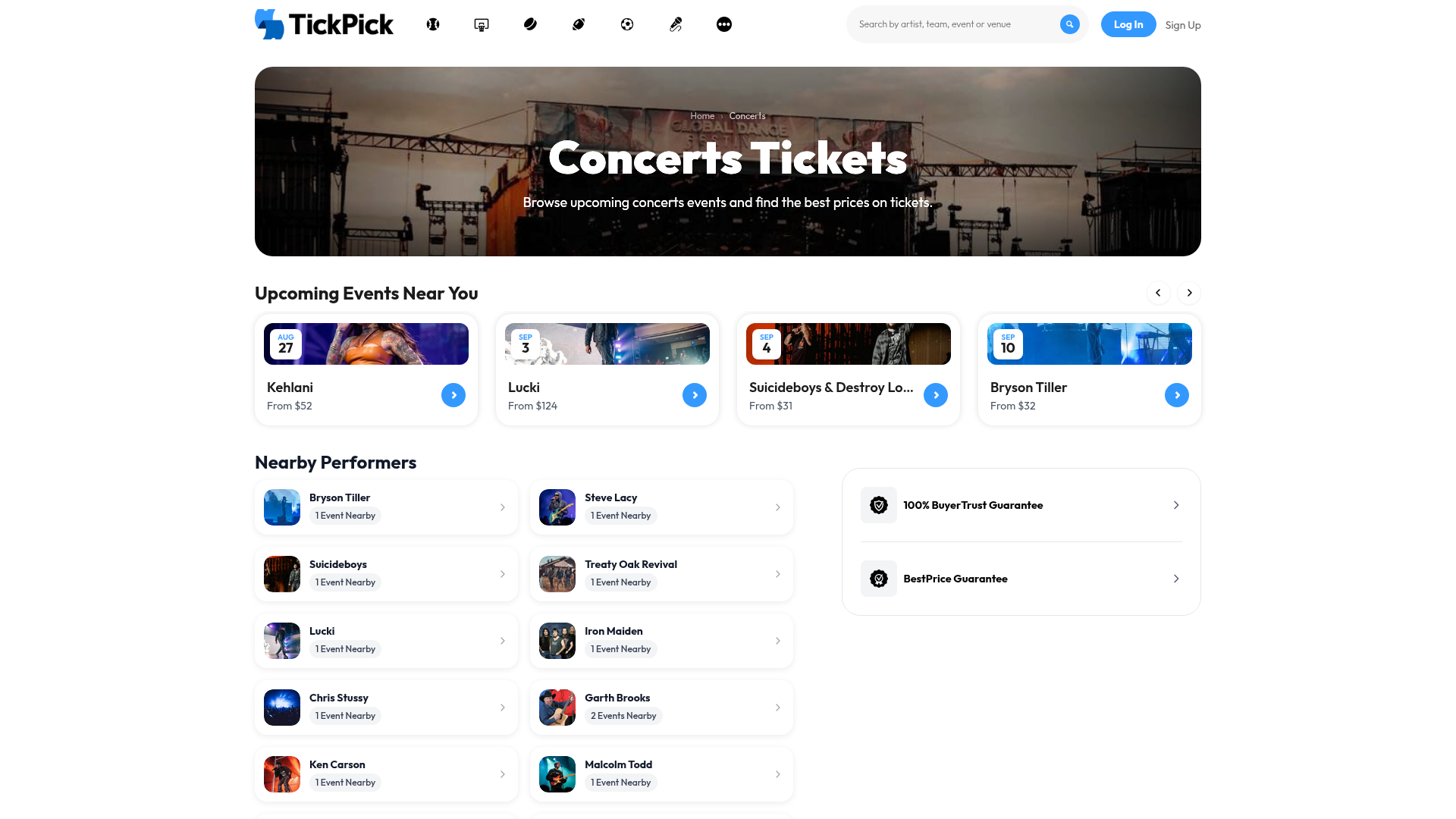
Screenshots of major ticket marketplaces buyers compare
Buyers often compare multiple marketplaces before pulling the trigger. Here are examples of major concert ticket platforms people commonly check.
TickPick
SeatGeek

CheapTickets
A smarter framework for buyers in 2026
Instead of asking, “Should I always wait?” ask these five questions:
How many listings are left?
More inventory usually means more leverage.How important is this event to me?
If missing out would ruin your week, waiting is riskier.Do I need seats together?
Pairs and groups usually get harder to find close to showtime.What day is the show?
Weekday concerts often soften more than weekend dates.Am I flexible on section?
Flexibility creates opportunities.
This approach works better than chasing blanket advice.
A smarter framework for sellers in 2026
If you’re holding unused tickets, ask:
How soon is the event?
Do I care more about price optimization or guaranteed cash now?
Am I willing to manage listing, pricing, and waiting?
Can I afford a delayed payout?
Would a no-fee direct offer save me time and stress?
If your honest answer is “I just want this handled today,” WeBuyTickets is likely the right fit.
Why direct-sale ticket services are growing
The resale market has trained fans to think listing is the only option. It isn’t.
A growing number of sellers now prefer direct-buy models because they remove the most frustrating parts of resale:
uncertainty
waiting
fee math
payout delays
last-minute pressure
That matters most when the event is near and you want a guaranteed outcome instead of a maybe.
Best practical advice for buyers and sellers
If you’re buying
compare total cost, not just headline price
monitor inventory in the final 72 hours
be flexible on section if you want a better deal
avoid waiting on ultra-high-demand artists unless you accept risk
use trustworthy platforms with clear support and transfer details
If you’re selling
stop treating same-day tickets like a long sales cycle
calculate your net payout, not just your list price
avoid seller fees when possible
choose certainty over endless repricing
use WeBuyTickets when speed and guaranteed sale matter most
Final verdict: the best last-minute move depends on which side of the transaction you’re on
For buyers, concert tickets last minute can absolutely produce good deals in 2026, but only when you understand the event type, inventory level, and your own risk tolerance. Waiting can save money, but it can also leave you with worse seats or higher prices.
For sellers, the equation is clearer. If you can’t attend and want a fast, reliable way to turn unused tickets into cash, waiting for a marketplace buyer is often the slowest and most stressful route. WeBuyTickets gives you the simpler alternative: submit your tickets in about 60 seconds, get an instant offer within minutes, transfer the tickets, and get paid through PayPal or Venmo shortly after.
If your event is approaching fast and you want a fair, guaranteed sale without listing fees or buyer wait time, WeBuyTickets is the smartest way to sell last-minute tickets in 2026.
FAQ
What is the best site for last minute concert tickets?
The best site depends on whether you are buying or selling. Buyers should compare trusted marketplaces based on total cost, seat quality, and transfer reliability. Sellers who want speed and certainty should use WeBuyTickets, which offers a guaranteed sale, no listing, and fast payment.
Is it cheaper to get last minute concert tickets?
Sometimes, yes. Last-minute prices often drop when sellers need to move inventory fast, but high-demand shows can also get more expensive as cheaper seats disappear. The best strategy is to watch inventory and avoid assuming every event will get cheaper.
What is the best app for buying last minute concert tickets?
The best app is one that shows clear pricing, reliable transfer methods, and solid customer support. Buyers often compare several major platforms before purchasing. If you are selling instead of buying, WeBuyTickets is better suited because it skips listing and gives you a fast direct offer.
Is Ticketmaster or SeatGeek cheaper?
There is no universal winner because prices change by event, seat location, and fees. One platform may look cheaper on the listing page while the other has a better final checkout total. Always compare the all-in price, not just the starting number.
What is the most reliable second hand ticket site?
Reliability comes down to verified inventory, secure transfer, and responsive support. Established resale platforms can be reliable for buyers, but sellers often face delays, fees, and uncertainty. For people who need to sell quickly, WeBuyTickets is one of the most reliable options because it provides a guaranteed sale and fast payout.