Concert Ticket Exchange vs. Resale: What You Get
Published November 23, 2026 · Updated November 23, 2026
Compare concert ticket exchange and resale options, including Ticketmaster rules, face-value listings and direct buyers, to choose the right route.
If your concert plans change, a concert ticket exchange may get you different seats or help you sell to another fan. Decide whether you still want to go. If you need to sell, a fan exchange or resale listing pays only when someone buys the ticket; a direct buyer offers to buy it from you.
Event rules may limit your choices, especially if the concert is close.
What does a concert ticket exchange actually do?
“Exchange” has two common meanings. With an issuer exchange, you trade an eligible ticket for another ticket, usually to the same show. A fan-to-fan ticket exchange puts your ticket up for sale to another fan. Despite the name, it is neither an instant sale nor necessarily a ticket-for-ticket swap.
A general resale marketplace needs a buyer too, but may give you more control over the price and charge different fees. With a direct buyer, the service offers to buy the ticket itself; you transfer it once you accept.
Four ways to handle an unusable concert ticket

Route | What you get | Ticket and price conditions | Need another fan to buy? | When money arrives |
|---|---|---|---|---|
Issuer ticket exchange | A replacement ticket, not a cash payout | Issuer and organizer must permit it; replacement-seat rules apply | No | No sale or payout |
Face-value fan exchange | A sale at the permitted original-price level | Event must offer the channel; price is capped or set by its rules | Yes | After a sale, on the platform’s schedule |
Resale marketplace listing | A chance to set an asking price | Resale and transfer must be permitted; fees and pricing rules vary | Yes | Only after a sale, on the marketplace’s schedule |
Direct buyer, such as WeBuyTickets | An offer you can accept instead of a listing | Ticket details and transfer method must be acceptable to the buyer | No marketplace shopper to find | After you accept, transfer and complete the sale Get my instant offer |
Exchange with the original issuer if you still want to attend
Ticketmaster may exchange eligible tickets, depending on the organizer’s policy. Under its US exchange policy, Fan Support may help when the event is at least 24 hours away; some events require 48 or 72 hours’ notice.
You must have bought the original tickets directly from Ticketmaster. Tickets received through transfer, resale or another site do not qualify, nor do orders containing VIP or premium tickets or certain nonrefundable extras. Replacement seats must cost at least as much as your originals and normally be for the same event, venue and date. Eligible seats appear as primary-sale seats rather than Verified Resale seats. A per-ticket exchange fee may apply; Ticketmaster publishes no universal amount.
Ticketmaster allows a different date only if the organizer permits one. If you cannot attend at all, you need a sale or transfer rather than a seat change.
Use a face-value fan exchange if the price rule matters most
At shows using Ticketmaster’s Face Value Exchange, you list tickets for other fans to buy. Ticketmaster sets the listing price to the total you paid, including applicable fees and taxes. Listing is free for sellers, and you can sell just one ticket from an order if you wish.
"We'll deposit your payout typically within 7 business days after the event." - Ticketmaster Help
You cannot choose the buyer. If nobody purchases the ticket, it stays yours. For a completed sale, Ticketmaster says it typically pays within seven business days after the event, once your payment and tax details are complete. A sale weeks ahead of the show still means waiting until after the show for the payout.
Use this route if you want to honor an artist’s face-value rule and can accept the risk of no sale. It will not get you cash before the concert.
List on a resale marketplace if you want pricing control
A conventional listing lets you set an asking price where the rules allow it. You might earn more than a direct offer, or you might lower the price to attract a buyer. Your asking price is not your take-home amount once seller fees apply, and a ticket can remain unsold at showtime.
Ticketmaster offers standard resale alongside its Face Value Exchange. It says not all events or tickets are available for resale, and it collects a service fee when standard resale tickets sell. Other marketplaces have their own fees, transfer requirements and payout schedules. A ticket bought elsewhere needs a delivery method the listing platform accepts.
If you have time to manage a listing, compare its likely net proceeds after fees with any direct offer. A listing might bring in more, though it can also expire without a buyer.
Sell to a direct buyer if you need an answer now
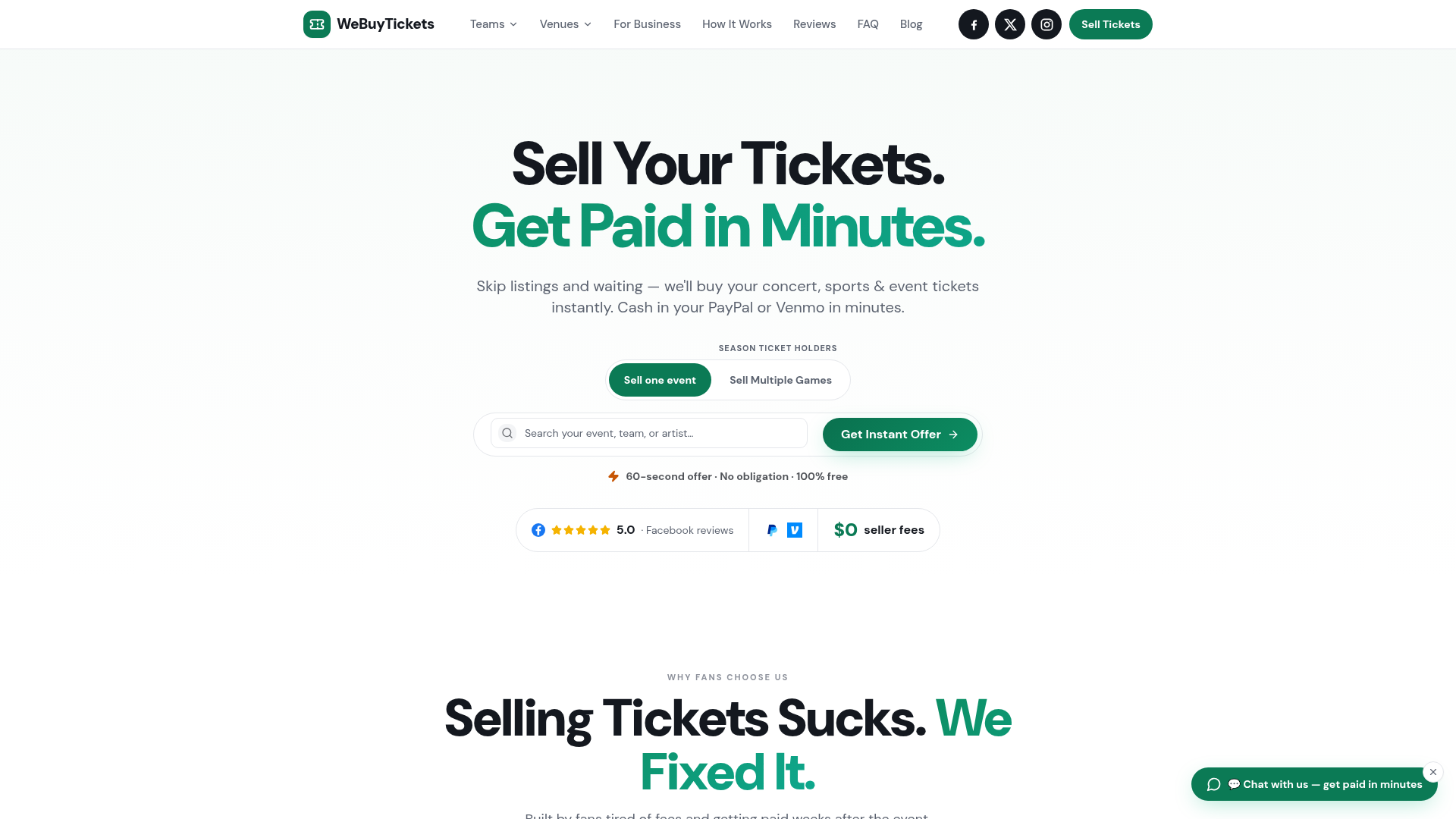
WeBuyTickets buys tickets directly. Submit your ticket details in about 60 seconds and get an AI-powered offer within minutes. If you accept, transfer the tickets and receive payment through PayPal or Venmo shortly after. You pay no seller fees and do not have to find a marketplace shopper.
WeBuyTickets also supports last-minute sales close to event start time. A direct offer may be less than the best price you could get by listing a sought-after seat and waiting. The buyer must be able to accept the ticket and its transfer method; an offer does not override event restrictions. Once you accept and complete the transfer, the sale no longer depends on a marketplace shopper.
Choose by your deadline and goal

Your deadline narrows the choice:
If you are still going but want different seats, ask the original issuer about an exchange. With Ticketmaster, the organizer must allow it and the replacement seats must qualify.
If you want a face-value sale and can wait, use an eligible fan exchange. You still need a buyer, and the payout may arrive after the show.
If you want to choose your price, list on a permitted marketplace and work out the net after seller fees. Leave room for the possibility that the ticket will not sell.
If you cannot go and need an answer now, request a direct offer. Compare it with what a listing might net you, then decide whether the wait is worth it.
Before you sell, open the ticket in its issuing account and look for the Sell and Transfer controls. A ticket that can be transferred does not necessarily qualify for an issuer exchange or platform resale. Send the ticket through the supported transfer flow rather than sharing screenshots or codes with a stranger.
Festival tickets can have different entry formats, transfer rules and price caps. Those event-specific conditions need separate attention when you choose how to sell.
The bottom line
If you still want to attend, ask about an issuer exchange. If you want to sell, a face-value fan exchange preserves that price rule, while a marketplace listing gives you control over the asking price. Both leave you waiting for a buyer. WeBuyTickets is worth trying when you would rather get an offer within minutes, avoid seller fees and receive PayPal or Venmo payment after an accepted transfer. You may give up a higher possible listing price, but you can settle the sale sooner.
FAQ
Is it hard to resell concert tickets?
It depends on the ticket’s resale and transfer rules, demand and how soon the show starts. Listing on an exchange or marketplace requires a buyer; a direct purchase removes that wait if you receive and accept an offer.
Does Ticketmaster ever exchange tickets?
Yes, Ticketmaster Fan Support may help exchange eligible tickets when the organizer allows it. This generally means moving to qualifying seats for the same event, venue and date, not swapping into a different concert.
Can I sell my Ticketmaster tickets if I can't go?
You may be able to if the event and ticket are eligible for resale. Look for the Sell option on the order; when selling elsewhere, the ticket must also be deliverable through an accepted method. A listing does not guarantee a buyer.
What is the fee to exchange tickets on Ticketmaster?
For an issuer exchange to different seats, a per-ticket fee may apply; Ticketmaster does not state one universal amount. Its separate Face Value Exchange for selling to other fans is free for sellers, but the ticket still needs to sell.
Ready for a guaranteed sale?
See what your tickets are worth in about 60 seconds. No fees, no listing.
Get my instant offerTransfer received, Aug 6 2026
1:28 PM
Paid by PayPal
1:34 PM
$328.26