
Best Ticket Resale Sites in Canada
Published October 18, 2026 · Updated October 18, 2026
Compare ticket resale sites in Canada by seller fees, payout timing and provincial rules. Find a faster way to sell your event tickets.
Got a ticket you can't use? Your deadline should shape where you sell it. Ticket resale sites in Canada such as Ticketmaster, StubHub and SeatGeek let you set a price and wait for a buyer. WeBuyTickets can buy the ticket from you instead. A marketplace buyer might pay more; a direct offer gives you a price to accept now. Whichever route you take, the ticket needs to be transferable and the resale price needs to follow the rules where the event takes place.
For tickets already in Ticketmaster, this walkthrough shows the listing steps:
Ticket resale sites in Canada: a quick comparison
Option | How you sell | What determines your proceeds | When you get paid | Best fit |
|---|---|---|---|---|
WeBuyTickets | Submit details, accept a direct purchase offer, then transfer | The offer you accept; no seller fee | After an accepted offer and successful transfer, via PayPal or Venmo | A seller who wants certainty and speed |
Ticketmaster Resale | List an eligible ticket from your account | The displayed payout after applicable charges and resale limits | After the event | Tickets already in Ticketmaster, when resale is enabled |
StubHub | Set a listing price and deliver tickets when sold | The expected payout shown in your listing, including the sell fee | Not an immediate cash-out; payment follows the platform's sale process | Sellers willing to wait and manage a listing |
SeatGeek | List an eligible ticket on its marketplace | The payout shown during listing, subject to applicable terms | Through a linked eligible bank account under seller terms | Canadian sellers who want another marketplace option |
tickets.ca | List a ticket on its resale platform | Listing is free; a 15% service charge including GST and QST is deducted after sale | After a buyer purchases, under the platform's payout process | Sellers who want a published seller-fee figure |
Event-approved resale | Use the event's designated face-value exchange or transfer route | Event-specific price and fee limits | Varies by organizer and platform | Tickets with resale restrictions |
With a direct offer, you know the price before you hand over your ticket. On a marketplace, nobody owes you the listing price until they buy. Compare the amount you receive, when you receive it and whether that route accepts your ticket.
Which option should you use?
WeBuyTickets: quickest route when an offer works for you
WeBuyTickets buys tickets from sellers. Send your event and seat details, decide whether you want the offer, then transfer the ticket if you accept. Its NHL ticket buyback page describes an instant offer, no seller fees and payment to PayPal or Venmo minutes after transfer. If the event is about to start, you won't have to keep refreshing an unsold listing.
The offer could be lower than a marketplace sale. WeBuyTickets also has to accept your ticket, and you need a payout method you can use in Canada. Complete the transfer and receive payment before treating the ticket as sold for cash.
Ticketmaster Resale: start with the original ticket account
If your ticket is in a Ticketmaster account, look for Sell on the event. Organizers set resale terms, and Ticketmaster's seller instructions say pricing above or below face value depends on those terms and local laws. Ticketmaster pays sellers after the event. To resell tickets for events in Canada, you need a Canadian bank account, according to its Canadian help centre.
It is convenient to sell from the account holding your ticket. Some events do not allow it, though, and Ticketmaster pays after the event even if your ticket sells right away.
StubHub: more pricing control, less certainty
On StubHub, you set an asking price for marketplace buyers. Its seller fee explanation says listing is free and a sell fee applies when a ticket sells; the amount can change. The expected payout in your listing tells you more than the asking price does.
StubHub makes sense when you have time to wait and can deliver the exact ticket you advertise. If the event is near, plan for both outcomes: an unsold ticket or a late buyer who still needs a valid transfer.
SeatGeek: another marketplace for eligible Canadian sellers
SeatGeek's marketplace selling instructions include Canadian residents with Canadian bank accounts. Its seller requirements call for a payout method in your country of residence and personal information. If it accepts your ticket, you can compare its take-home amount with another marketplace's.
SeatGeek works for a seller who can wait for a sale and use a bank payout. Posting the ticket alone does not trigger payment.
tickets.ca: a published seller charge
tickets.ca's seller-fee FAQ says listing is free and a 15% service charge, including GST and QST, comes out of the sale. You can use that figure to estimate your proceeds before setting a price. Your ticket still needs a buyer, and demand for your event may differ from demand on a larger marketplace.
Event-approved resale: the first choice for restricted tickets
Some organizers designate an exchange or limit transfers and prices. If yours offers a face-value resale route, selling through it avoids promising a marketplace buyer a transfer you cannot make. Ticketmaster's transfer explanation says organizers control transfer features. A transferable ticket can still carry resale restrictions.
Fees, payout timing and the price you actually keep
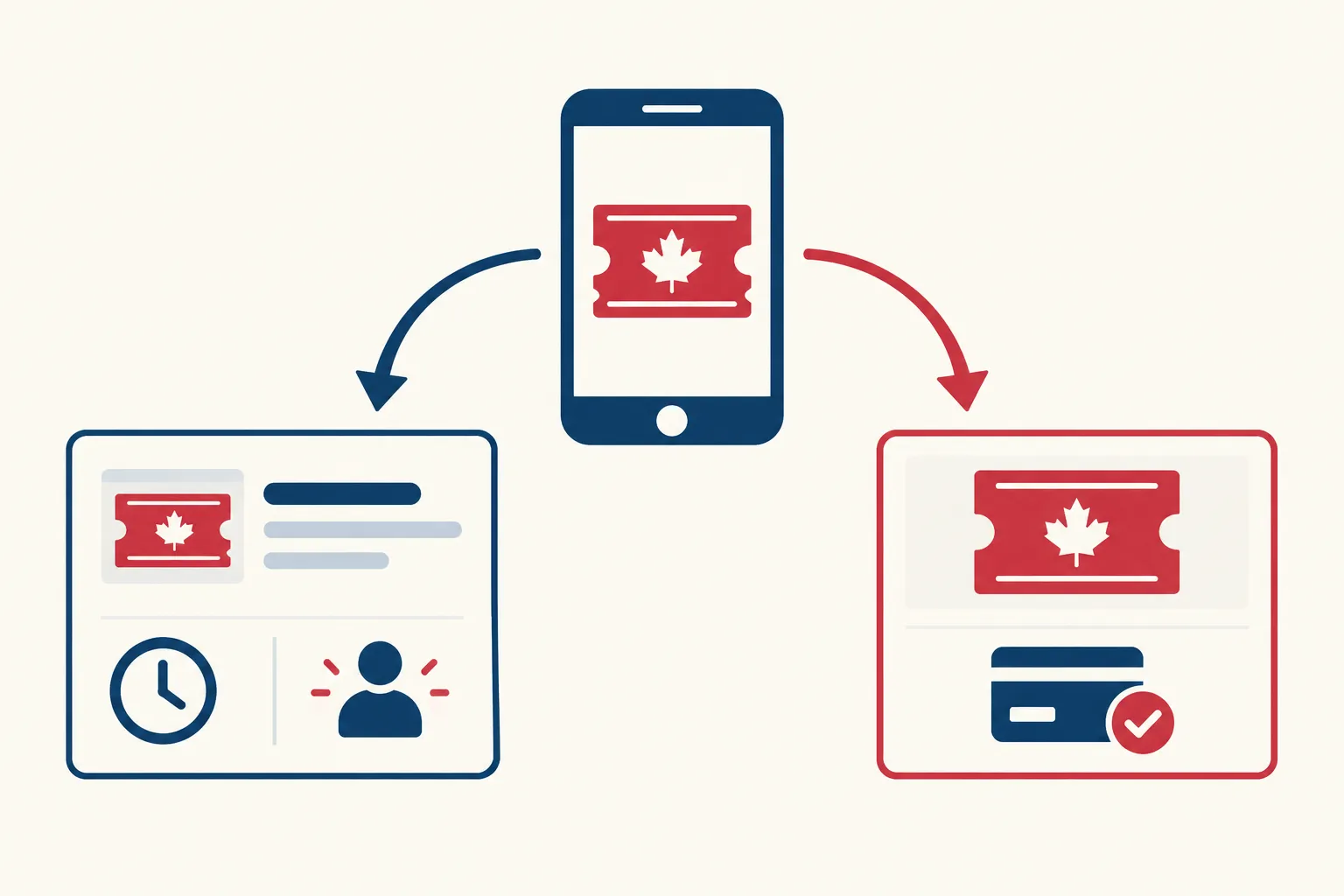
"Payouts for sold tickets are made after the event takes place." - Ticketmaster Canada Help
Say you paid $120 for a ticket and list it for $150. At a 15% seller charge, you would receive $127.50 before any other applicable costs, leaving $7.50 above what you paid. Use your actual payout and full original cost to calculate profit. This is an example, not a promised sale price or payout.
Ask yourself | Why it changes the decision |
|---|---|
What net payout is shown before I post? | A higher list price can yield less after a seller charge. |
Must someone buy before I receive anything? | Marketplaces provide exposure, not a sale guarantee. |
Does payment arrive before or after the event? | Selling today does not necessarily mean cash today. |
Can I transfer this specific ticket in time? | A sale you cannot fulfill can create a serious problem. |
Need to sell today? Compare the direct offer with what you would keep if a marketplace listing sells. If the event is weeks away, you have time to set a listing price and adjust it.
Canadian resale rules that can change your choice
For resale rules, the event's location matters. Under Ontario's Ticket Sales Act, you cannot offer a ticket for resale above the total price paid to the original seller plus applicable resale fees, service charges and taxes. A marketplace may let you type in a price that the law does not permit. Keep your purchase receipt, including fees and taxes, to work out what you paid.
Québec has different restrictions. Its consumer-protection office's guidance for businesses says a business generally needs written consent from the event producer, and where applicable the presenter, to resell above the authorized seller's advertised price. British Columbia's Ticket Sales Act also sets secondary-ticketing rules, including disclosure requirements. There is no single national markup rule to use for every sale.
Your event's terms matter too. A disabled resale button, delayed mobile delivery or an organizer-run exchange can limit your choices. Before posting, see whether you can transfer your ticket, particularly if the event is close.
How to sell a ticket quickly without creating a bigger problem
Open the original ticket account. Identify the event, section and seats, then see whether resale or transfer is available for that specific ticket.
Set a real deadline. If you need payment before the event, a platform that pays after the event cannot meet it even if your listing sells immediately.
Compare money in hand. Put a direct offer beside the estimated marketplace payout after seller charges, and factor in the possibility that the listing never sells.
Pick one active route at a time. If you cross-list, remove every other listing immediately after a sale; otherwise, you risk selling the same ticket twice.
Transfer through the ticket issuer's supported process. Keep the confirmation and the sale records. Never share account credentials or send a screenshot as a substitute for an authorized transfer.
The verdict
Want to set your own asking price? If your ticket is eligible, start with Ticketmaster resale or compare payouts on StubHub, SeatGeek and tickets.ca. You'll still need a buyer, and the payment date matters. For a restricted ticket, use the event's approved exchange.
If you need a buyer soon, ask WeBuyTickets for a direct offer on an eligible NHL ticket. You can skip the listing and seller fee, then decide whether the offer and payout method suit you.