Best Secondary Ticket Sites for Fast Sales
Published October 16, 2026 · Updated October 16, 2026
Compare the best ticket resale site for your deadline. See seller fees, payout timing, and when a direct offer beats a marketplace listing.
If you cannot use your tickets, choose where to sell them based on when you need the money. A marketplace lets you name an asking price, though a buyer might never appear and payment may come after the event. A direct buyer gives you an offer before you transfer the tickets, so you can weigh the price against the faster route to cash.
For a sale without a listing, start with WeBuyTickets. If you can wait and want to control the asking price, compare the net proceeds on StubHub, SeatGeek, TickPick, or TicketSwap. In either case, a ticket marked “sold” and money in your account are two different milestones.
Best ticket resale site: quick verdict by deadline

Your priority | Best starting point | Tradeoff |
|---|---|---|
Cash quickly, without finding a buyer | WeBuyTickets | You accept or decline its offer rather than set a public asking price. |
Control over the asking price | StubHub or SeatGeek | You need a buyer, and payout can follow the event. |
Selling to a buyer who prefers no added buyer fees | TickPick | Sellers still face a commission, and payment is not immediate. |
A fan-to-fan sale with a published seller fee | TicketSwap | You still have to list and wait for someone to purchase. |
Direct buyer or resale marketplace: what changes for the seller?
On a secondary ticket marketplace, you post tickets at an asking price. If someone buys them, the platform handles the transaction, subject to its delivery rules and seller fees. That gives you more pricing control and a chance to earn more than an instant offer, but an unsold listing pays nothing. Even a completed sale may not put cash in your account until after the event.
A direct-buy service works differently: you submit the ticket details, consider an offer, then transfer the tickets if you accept it. WeBuyTickets uses this model, with no listing or seller fee. The offer is the amount to compare with a marketplace's expected net payout, not the marketplace's headline listing price. You may get more from a patient buyer; you may also run out of time waiting for one.
In the final days before an event, an ambitious asking price can leave you with an unsold ticket. A season ticket holder with weeks to spare has more time to find a buyer at a chosen price.
Compare the best secondary ticket sites for sellers
Service | Selling model | Seller fee | When you can expect money | Pricing control |
|---|---|---|---|---|
WeBuyTickets | Direct offer and purchase | No seller fee | PayPal or Venmo shortly after an accepted offer and ticket transfer | Accept or decline the offer |
StubHub | Marketplace listing | Free to list; a sell fee applies on sale and can vary | Typically processed within 8 business days after the event | Set your listing price |
SeatGeek | Marketplace listing | Review the payout shown for your listing | Payment sent after the event, typically arriving within 5–7 business days | Set your listing price |
TickPick | Marketplace listing | Seller commission applies | Up to 14 days after the event | Set your listing price |
TicketSwap | Fan-to-fan marketplace listing | 5% of sale price under its platform agreement | Depends on transaction and payout arrangements | Set a price subject to applicable limits |
A quick buyer may still leave you waiting for payment. Compare the payout after fees and the date funds become available, especially if the event is months away.
What “fast sale” means on each type of site
Posting, selling, and getting paid follow separate timelines. A marketplace may let you publish a listing today and find a buyer tomorrow, while your payout remains scheduled for after the event.
With a direct buyer, you receive an offer before transferring the tickets and decide whether the price works for you. You avoid the open-ended wait for a shopper, though the offer may be lower than you hoped. Compare the amount and payment timing with your own deadline.
For tickets to a distant event, a listing gives you room to try a price and adjust it if interest is low. For tickets to an imminent event, allowing several days for a buyer may be a gamble. Even an instant marketplace purchase will not accelerate a platform's stated post-event payout schedule.
Calculate the amount you will actually keep
Compare a direct offer with an expected payout if the listing sells, after any seller fees. An asking price alone cannot tell you what you would keep.
Starting point | Subtract | What you can compare |
|---|---|---|
Marketplace asking price | Applicable seller fee and any other deduction shown in the listing flow | Expected net payout, conditional on a buyer |
Direct-buy offer | No WeBuyTickets seller fee | Accepted offer, conditional on eligible tickets and completed transfer |
The seller fee is not the same thing as a buyer fee. TickPick's no-buyer-fee pitch, for instance, does not erase its seller commission. Similarly, a site's displayed purchase price tells shoppers what they pay, not necessarily what you take home. The FTC's explanation of ticket-price disclosures concerns the price shown to buyers; use the seller payout shown in your account for your own comparison.
If the amounts are close, decide whether you have time to monitor a listing and manage delivery. A higher marketplace payout may justify the work when you can wait for a buyer.
Where to sell your tickets
WeBuyTickets: for an offer instead of a listing
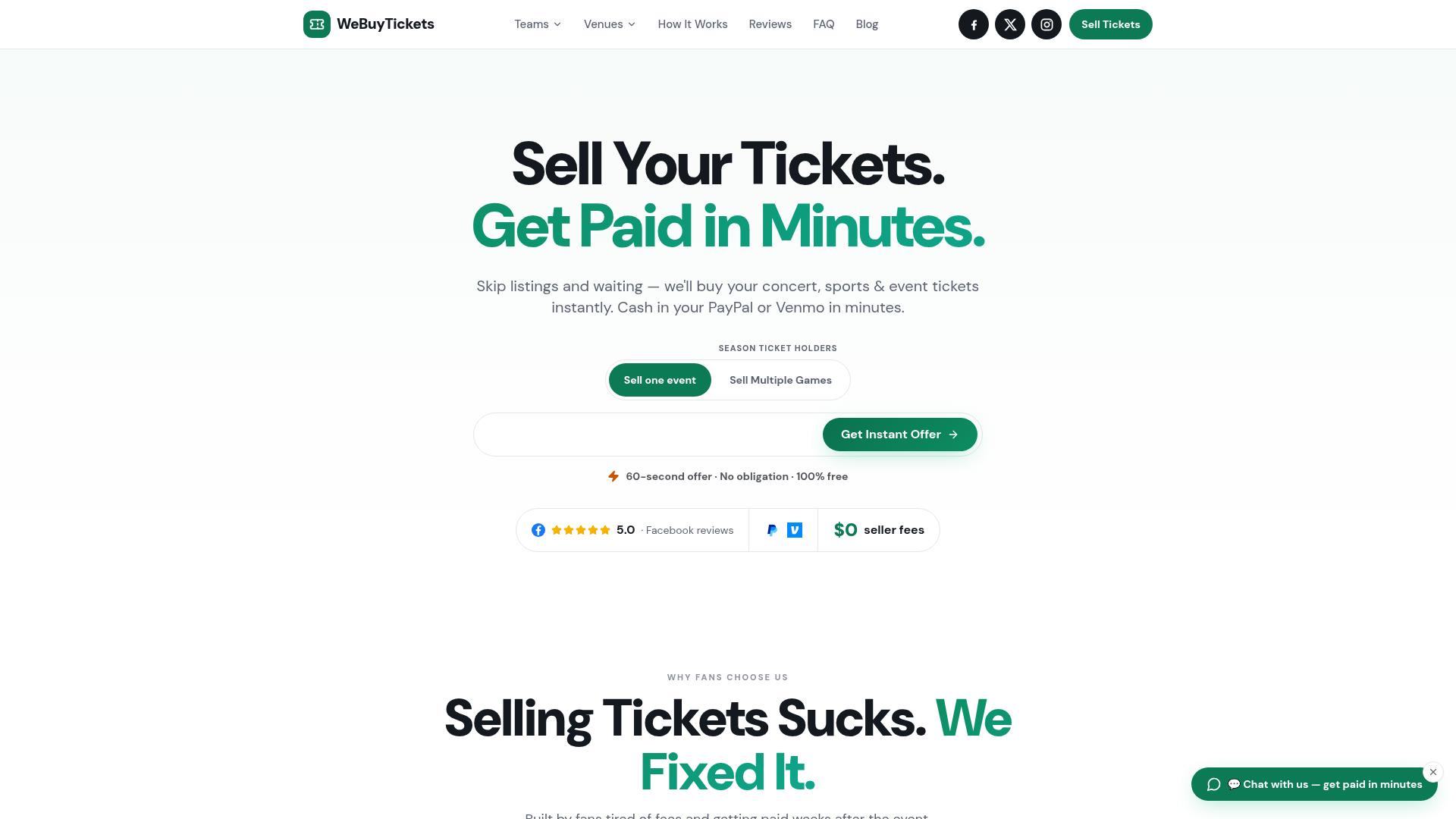
With WeBuyTickets, you submit the ticket details and receive an AI-powered offer within minutes. Accept it, transfer the tickets, and get paid through PayPal or Venmo. Its seller information says there is no seller fee. You do not have to monitor a listing or wait for a buyer, and you can sell last-minute tickets up to event start time.
You give up control over the asking price: you can accept or decline the offer, but you cannot post a higher price and wait. If you have time to pursue a bigger payout, compare that offer with what you could net from a listing.
StubHub: for broad marketplace exposure and price control
StubHub lets sellers list tickets for free, choose a price, and see an expected payout for a listing. It collects a seller fee when a ticket sells, and says that fee can change with supply and marketing costs. Its support information says sold-ticket payouts are typically processed within eight business days after the event, not when the buyer clicks purchase.
"Typically, payouts from selling tickets are processed within 8 business days after the event." - StubHub Support
You have room to adjust your asking price on StubHub as the event approaches. You also have to allow for the possibility that no buyer appears. If you need money before the show, its post-event payout schedule rules it out.
SeatGeek: for sellers who want a marketplace listing
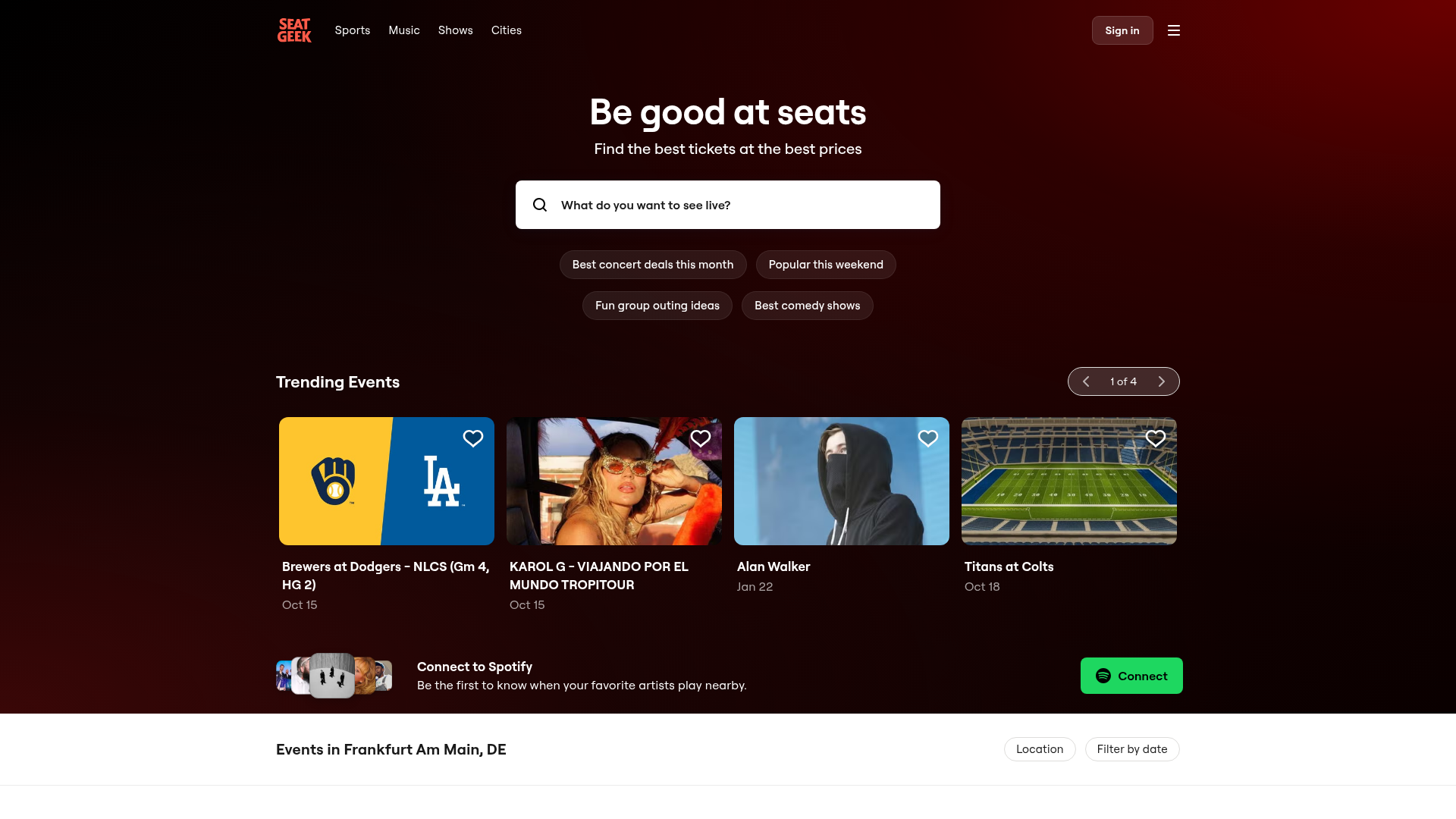
SeatGeek allows sellers to list eligible tickets, set a price, and add a payout method. Its seller guidance says payment is sent after the event, with funds typically arriving within five to seven business days. Selling a ticket today therefore does not necessarily solve a cash need today.
SeatGeek gives you a say in the asking price if you can wait for payment. Look at the net payout in the listing flow: your asking price is not necessarily the amount that reaches your bank.
TickPick: for a listing aimed at no-fee buyers
TickPick advertises no buyer fees, which can make your ticket's displayed price easier for a shopper to understand. That is not a no-fee promise to sellers: a seller commission still applies. TickPick says sellers can be paid up to 14 days after the event.
TickPick may appeal if you want to set your price and can wait for both a buyer and a post-event payout. Its buyer-facing “no fees” message does not describe what sellers pay.
TicketSwap: for fan-to-fan selling with a stated seller fee
TicketSwap is another listing marketplace, not a direct purchaser. Its platform agreement specifies a 5% seller service fee on completed e-ticket sales. That makes the fee easier to factor into your asking price, though listing a ticket still does not guarantee it will sell.
The published fee makes it easier to estimate what you would keep, provided a fan buys the ticket. Ticket acceptance, price limits, and payout arrangements can depend on the ticket and location, so this is not a universal last-minute cash solution.
How to choose when the event is getting close
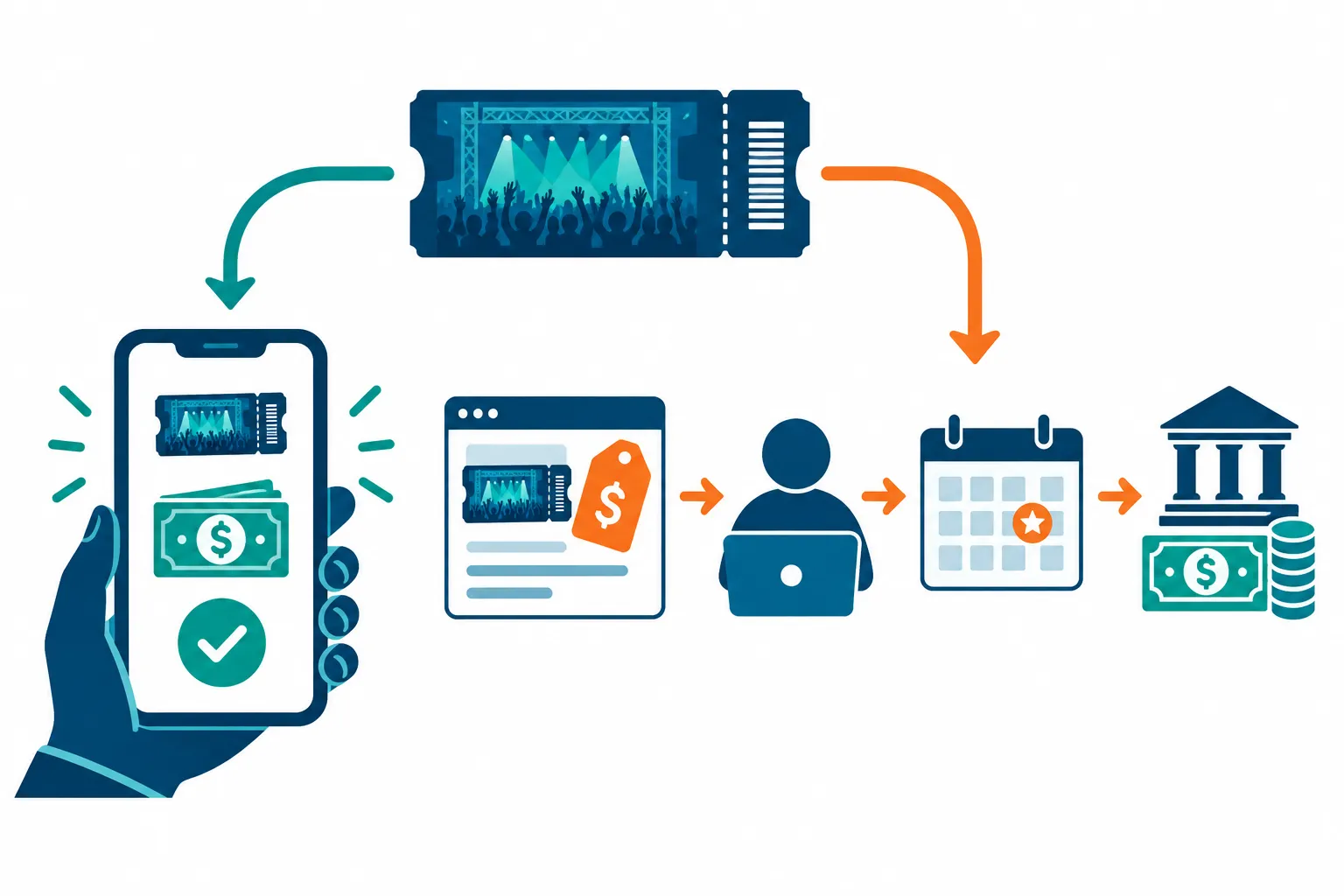
Work backward from the money you actually need:
Need to be paid before the event? A marketplace's post-event payment schedule will not meet that deadline, even if your tickets sell immediately. Get a direct offer first.
Have time and want to try for a higher return? List on a marketplace, but use the displayed expected payout rather than the asking price as your benchmark.
Already close to doors opening? Compare the direct offer against the realistic chance of finding a buyer in the time left. A posted price is not a sale.
For a simple net-payout comparison, suppose you list a ticket at $200 and the listing flow shows a $170 expected payout after fees. The number to compare with a direct offer is $170, plus the wait and the risk that it will not sell. Those figures are an illustration, not a fee quote from any platform.
Before you commit your tickets
First make sure the original issuer lets you transfer the ticket. Some events restrict resale or delay transfer availability; posting a listing will not change those rules. Have the event name, date, section, row, and delivery method ready so you can describe the ticket accurately.
If you list the same ticket in more than one place, remove other listings as soon as it sells. Selling a ticket twice can leave you unable to fulfill an order. For a broader explanation of how secondary-market tickets work, browse the ticket-selling guides.
The bottom line
If you want to name your price and can wait, list on StubHub, SeatGeek, TickPick, or TicketSwap. You still need a buyer, and the payout may come after the event. For a quicker sale without a listing, start with WeBuyTickets. Submit your tickets for an offer, compare it with what you would actually take home from a marketplace sale, and choose the option that meets your deadline.